

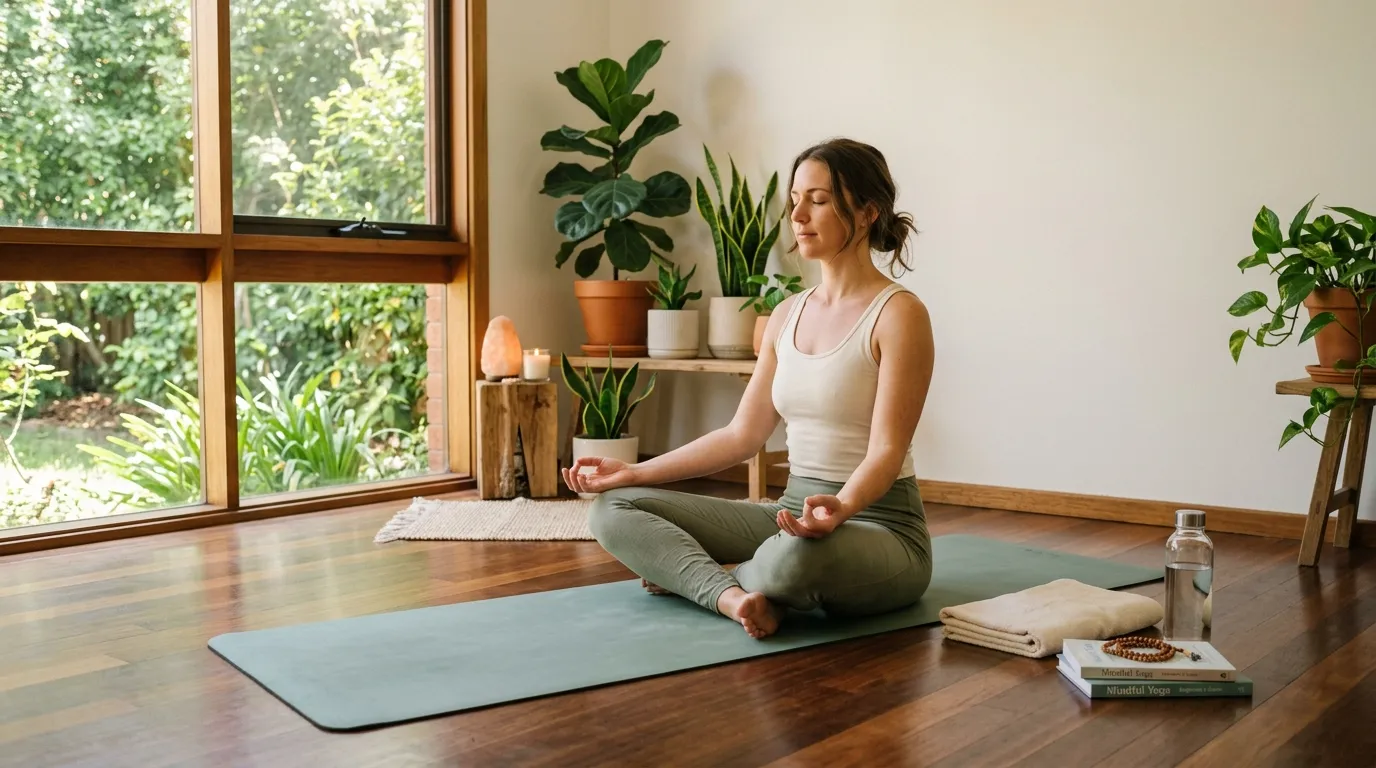
Your mind races, your shoulders tense, and rest feels impossible. There’s a gentle way out. Mindful yoga for beginners blends slow movement with focused breathing to calm your nervous system, ease stress, and help you feel at home in your body again, starting today.
This guide shows you how to begin a mindful movement practice from scratch. You’ll learn what mindful yoga is, why it works, and how to build a simple daily routine. We cover beginner-friendly poses, breathing techniques, a yoga style comparison, common mistakes, and expert tips, all backed by research so you can practice with confidence.
What Mindful Yoga Actually Is
Mindful yoga is the marriage of physical movement and focused attention. Instead of rushing through poses to burn calories, you slow down and notice each sensation, breath, and thought without judgment. This is what practitioners call present-moment awareness, and it transforms ordinary stretching into a calming, meditative experience.
Traditional yoga has always contained this quality. According to Positive Psychology, classical yoga weaves mindfulness into every element, from postures to breathing to meditation. Modern mindful yoga simply makes that inward focus explicit, which is perfect for newcomers who want stress relief rather than gymnastic feats.
You don’t need flexibility, strength, or fancy gear. You only need willingness to pay attention. The practice rests on a strong mind-body connection, meaning your physical movements and mental state work together rather than apart. When you move with awareness, you train your brain to stay present, which is a skill that spills over into daily life.
How It Differs From Regular Exercise
A well-known saying captures it perfectly: movement with awareness is yoga, and movement without awareness is just exercise. In a typical workout, your mind wanders to your to-do list. In mindful yoga, you gently guide your focus back to your breath and body every time it drifts.
Why Beginners Love It
Because there’s no “winning” or competing, the practice feels safe. You measure success by how present you feel, not by how deep you fold. That gentle approach removes the intimidation that keeps many people off the mat, so let’s look at why it works so well.
Why Mindful Yoga Works: The Science
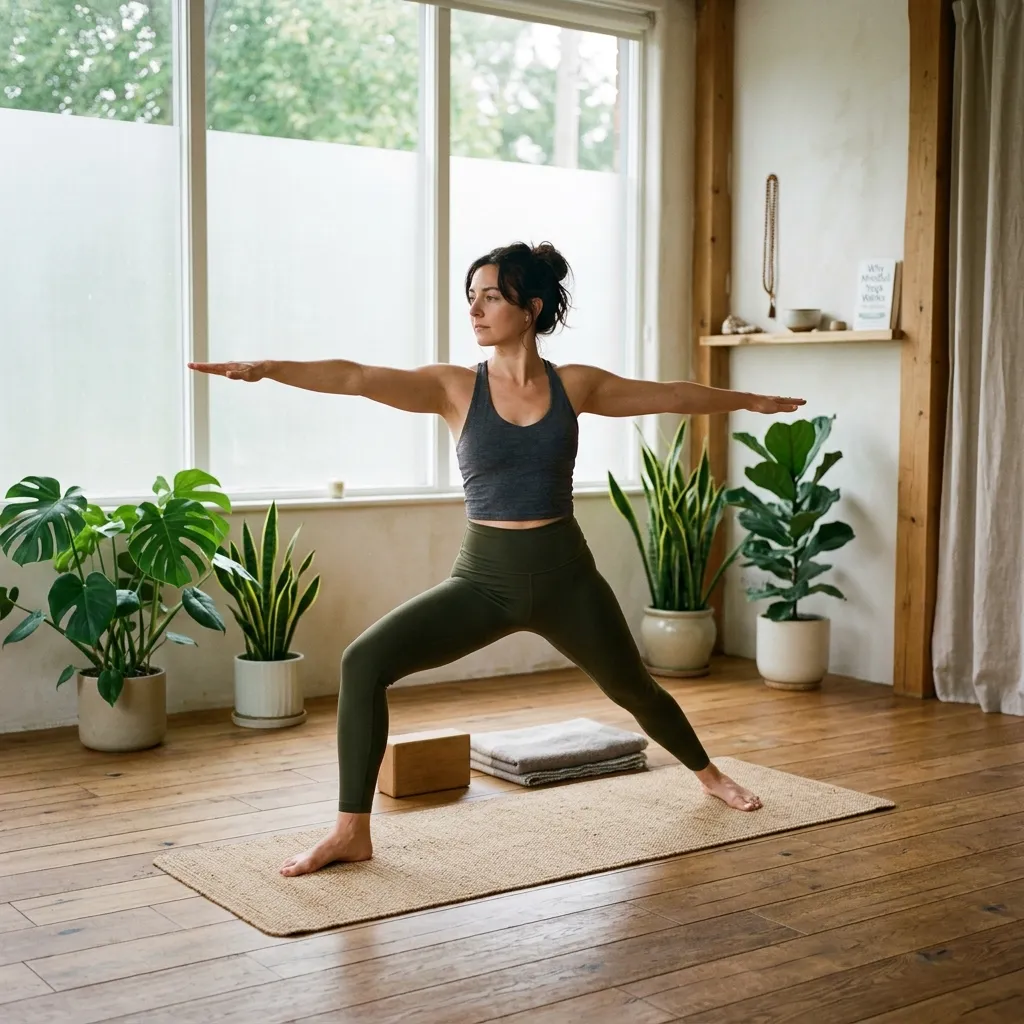
The benefits aren’t just spiritual claims. Research shows mindful movement produces measurable changes in your body and brain. When you move slowly and breathe deeply, you activate your parasympathetic nervous system, the branch responsible for “rest and digest.” This lowers your heart rate, reduces cortisol, and shifts you out of fight-or-flight mode.
The National Center for Complementary and Integrative Health reports that research suggests yoga may relieve stress, improve sleep and balance, ease neck pain and tension headaches, and help manage anxiety symptoms or depression. That’s a wide-ranging payoff for a practice that asks so little of you physically.
Mindful yoga also strengthens emotional regulation. By pausing to observe feelings without reacting, you build the mental space to respond thoughtfully rather than snap. Positive Psychology notes that the practice fosters greater self-awareness, helping you respond rather than react to emotional triggers.
Mental Health Gains
Studies link consistent practice to reduced anxiety, better focus, and improved mood. The combination of breath, movement, and stillness quiets the mental chatter that fuels worry. Over time, this supports a calmer baseline state.
Physical Health Gains
Regular practice improves flexibility, strength, balance, and posture. INTEGRIS Health points out that mindful yoga can also boost cardiovascular health and support the immune system. These physical wins reinforce the mental ones, creating an upward spiral of wellbeing that motivates you to keep going.
The Roots: Understanding Yoga’s Deeper Framework
To practice mindfully, it helps to know what you’re stepping into. Yoga is far older and richer than the poses you see online. The word itself comes from Sanskrit and means “to yoke” or “to unite,” reflecting the practice’s goal of uniting mind, body, and spirit into one harmonious whole.
Ancient teachings describe the eight limbs of yoga, a roadmap for living well that extends far beyond physical postures. These eight steps include ethical guidelines, self-discipline, physical poses, breath regulation, sensory withdrawal, concentration, meditation, and ultimately a state of blissful union. Knowing this framework reminds you that the postures are just one doorway into a much larger practice.
You don’t need to master all eight limbs to benefit. For beginners, three matter most: the physical postures known as yoga asanas, the breath control practices, and the meditative focus that ties them together. This trio forms the practical heart of mindful yoga.
The Three Beginner Pillars
Think of your practice as a three-legged stool. The first leg is movement through yoga asanas. The second is breathing, which anchors your attention. The third is a simple meditation practice, even if it’s just resting quietly at the end of a session. Balance all three and your practice stays steady.
Why This History Matters
Understanding these roots gives your practice depth and meaning. You’re not just stretching; you’re joining a tradition thousands of years old that was designed specifically to cultivate inner peace. That context makes each session feel purposeful, which naturally leads us to the breath.
Breathwork: The Heart of the Practice
If mindful yoga has a secret weapon, it’s the breath. Yogic breathing, known as pranayama, means breath extension or control, and many teachers consider it the single most important part of the practice. Your breath is the bridge between your body and your mind, and learning to guide it is a game-changer for stress relief.
Here’s why it matters so much: your breath directly influences your nervous system. Fast, shallow breathing signals danger and ramps up anxiety. Slow, deep breathing signals safety and switches on your calming response. By practicing conscious breath control, you gain a portable tool you can use anywhere, from a traffic jam to a tense meeting.
For beginners, start simple. You don’t need complex techniques right away. Focus first on lengthening your exhale, since a longer out-breath is especially soothing and directly triggers relaxation.
Simple Breathing Techniques to Start
Try these three beginner-friendly approaches to build your breathing foundation:
- Slow belly breathing: Place a hand on your stomach and breathe so your belly rises on the inhale and falls on the exhale, keeping it slow and smooth.
- Extended exhale: Inhale for a count of four, then exhale for a count of six, letting the longer exhale melt away tension.
- Ocean breath (Ujjayi): Gently narrow your throat so your breath makes a soft ocean-like sound, keeping inhales and exhales roughly equal in length.
Pairing Breath With Movement
Once breathing alone feels natural, sync it with motion. Inhale as you open or lift, exhale as you fold or release. This coordination deepens your present-moment awareness and turns a series of stretches into a flowing meditation. With breath as your anchor, you’re ready to explore the poses.
Best Beginner Poses to Start Today
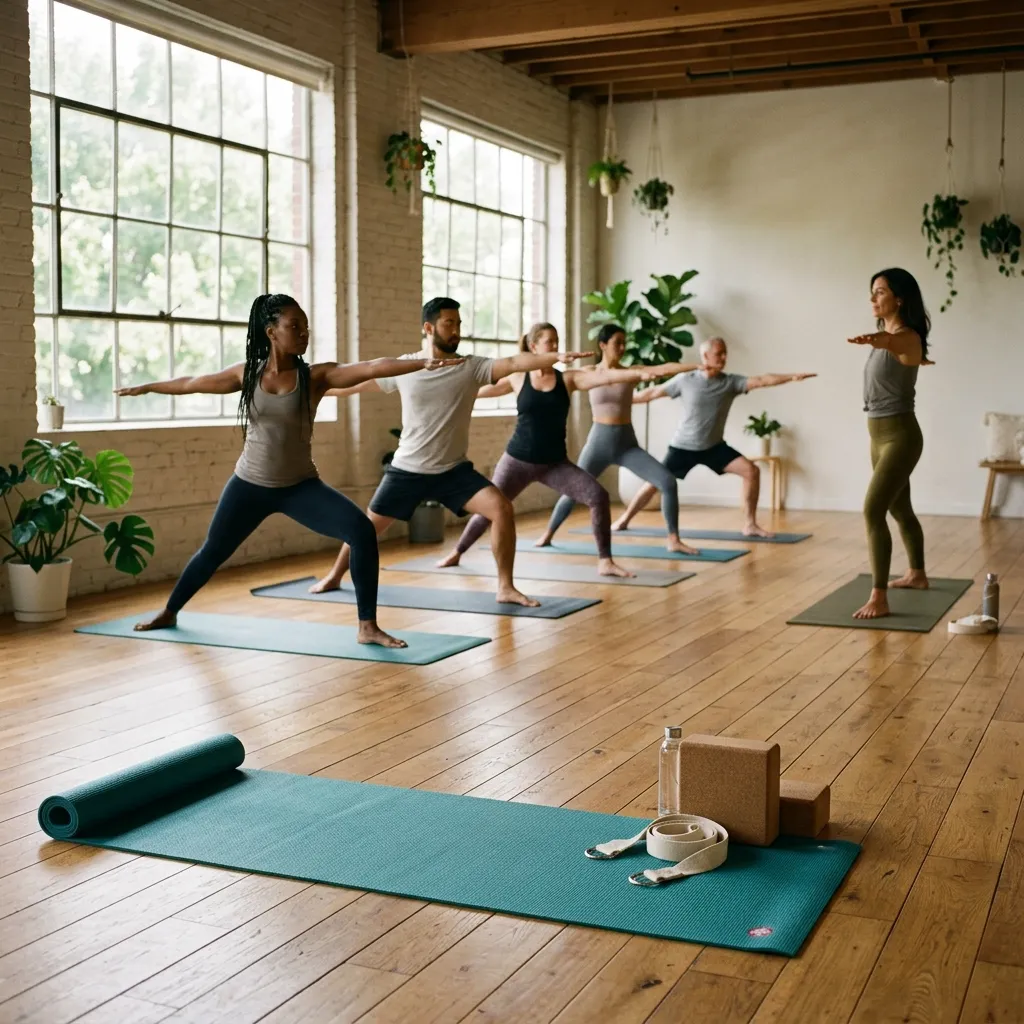
You can build a complete mindful practice with just a handful of gentle poses. The goal isn’t to look impressive; it’s to feel each posture and breathe through it slowly. These beginner-friendly yoga asanas build body awareness, ease tension, and require no prior experience.
Move slowly into and out of each shape. Hold for several breaths, notice what you feel, and never force anything. If a pose causes sharp pain, ease off. Discomfort should feel like a gentle stretch, never a strain. Grab your yoga mat, or simply use a carpet or towel, and try these.
Grounding and Centering Poses
Easy Pose (Sukhasana) is a simple cross-legged seat that creates a stable base for breathing and meditation. Sit tall, relax your shoulders, and rest your hands on your knees. Mountain Pose (Tadasana) looks like plain standing, but it engages your legs and core while teaching alignment and grounding. Both build stability and are perfect starting points.
Gentle Movement and Release
Cat-Cow (Marjaryasana-Bitilasana) links breath with spinal movement: arch your back on the inhale, round it on the exhale. This warms the spine and builds the mind-body connection beautifully. Child’s Pose (Balasana) is a restful forward fold that soothes your nervous system and turns your attention inward, making it ideal whenever you need a break.
Building Focus and Balance
Tree Pose (Vrikshasana) asks you to root one foot and rest the other against your standing leg, demanding concentration and steady breathing. It builds focus and patience. Finish every session with Corpse Pose (Savasana), lying flat and still for several minutes. As Yoga Journal notes, this closing pose offers deep relaxation and a moment of inner stillness. With poses in hand, let’s find the right style for you.
Choosing the Right Yoga Style for Beginners
Walk into any studio schedule and you’ll face a dizzying menu of yoga styles. Not all suit newcomers seeking calm. Some are athletic and fast, while others are slow and meditative. For mindful practice, gentle and restorative styles fit best because they prioritize awareness over intensity.
The most beginner-friendly options emphasize slower pacing, longer holds, and clear instruction. Hatha yoga focuses on individual poses rather than rapid flows, giving you time to understand each shape. Restorative yoga uses props and long, supported holds to melt away tension. Both align perfectly with mindfulness goals.
The table below compares popular styles so you can pick with confidence based on your pace, goals, and comfort level.
|
Yoga Style |
Pace |
Best For |
Beginner-Friendly? |
|---|---|---|---|
|
Hatha |
Slow |
Learning poses and alignment |
Excellent |
|
Restorative |
Very slow |
Deep relaxation and stress relief |
Excellent |
|
Yin |
Slow, long holds |
Flexibility and stillness |
Very good |
|
Vinyasa |
Moderate to fast |
Building flow and stamina |
Moderate |
|
Iyengar |
Slow, precise |
Alignment with props |
Very good |
|
Power |
Fast |
Fitness and strength |
Challenging |
Start Slow, Then Explore
If you’re brand new, begin with hatha yoga or a class labeled “gentle,” “foundational,” or “beginner.” These give you room to learn without pressure. As you gain confidence, you can sample other styles to see what resonates.
When to Choose Restorative
On high-stress days, restorative yoga is your best friend. With just a few supported poses held for several minutes each, it delivers profound calm with minimal effort. It’s also gentle on the joints, which makes it accessible to nearly everyone, so now let’s build your daily habit.
Building Your Daily Mindful Practice

Consistency beats intensity every time. A few mindful minutes each day will transform your wellbeing more than an occasional hour-long session. The key is making practice so easy and enjoyable that you actually keep doing it. Start absurdly small and grow from there.
Begin with just five minutes a day. Choose a consistent time, such as right after waking or just before bed, so it becomes a natural anchor in your routine. Positive Psychology suggests attaching a new practice to something you already do, which uses your existing habits to make the new one stick.
Create a simple, inviting space. Roll out your yoga mat in a quiet corner, dim the lights if you like, and silence your phone. A dedicated space signals your brain that it’s time to slow down and cultivate stress reduction.
A Simple Starter Routine
Follow this five-step flow for a gentle, complete session:
- Center (1 minute): Sit in Easy Pose and take slow belly breaths to arrive in the moment.
- Warm up (1 minute): Flow through Cat-Cow, matching breath to movement.
- Move (2 minutes): Hold Mountain Pose and Tree Pose, breathing steadily in each.
- Rest (1 minute): Sink into Child’s Pose and soften completely.
- Integrate (1 minute): Finish in Corpse Pose, letting your body absorb the calm.
Growing Your Practice Over Time
Once five minutes feels natural, add a few more. Extend your holds, try new poses, or lengthen your final rest. Let curiosity, not obligation, guide your growth. This patient approach builds a lasting habit, though a few pitfalls can trip up beginners, which we’ll cover next.
Common Mistakes to Avoid
Even the gentlest practice has traps that can derail your progress or cause frustration. The good news is that awareness of these pitfalls makes them easy to sidestep. Most beginners stumble in predictable ways, so knowing them upfront saves you grief.
The biggest mistake is forcing your body into poses. Yoga is not about touching your toes or achieving a picture-perfect shape. Pushing too hard invites injury and kills the calm you’re seeking. Always work within your comfortable range and let flexibility come gradually. The NIH guidance notes that most yoga injuries are sprains and strains, often from overexertion, and recommends beginners avoid extreme practices.
Another frequent error is treating yoga like a competition. Comparing yourself to others, or even to your past self, breeds self-criticism and steals your joy. Mindfulness means observing without judgment, which includes self-compassion toward your own limits. If your mind wanders during practice, that’s normal; gently return your focus without scolding yourself.
People also skip the breath, rushing through poses on autopilot. Without conscious pranayama, you lose the mindful quality entirely and turn your session into mere stretching. Finally, many quit too soon because they expect instant results. Change unfolds over weeks of steady practice, not days. Inconsistency is the silent killer of progress, so start small and show up regularly. Avoid these traps and your practice flourishes, especially when you add the expert habits below.
Expert Tips and Pro Insights
Seasoned practitioners and researchers share a clear message: mindful yoga is a skill you cultivate, not a destination you reach. The pros focus on presence and patience rather than perfection. Their wisdom helps you get more from every session while sidestepping burnout and frustration.
Here’s what experienced teachers recommend:
- Approach with compassionate curiosity. Meet discomfort or restlessness with kindness instead of frustration. Positive Psychology emphasizes that discomfort is a natural part of growth, so treat yourself gently.
- Use props freely. Cushions, blankets, blocks, and bolsters aren’t crutches; they make poses accessible and comfortable. Even a folded towel under your forehead in Child’s Pose deepens your relaxation.
- Anchor to the breath when your mind wanders. Instead of fighting stray thoughts, use your breath control to gently return to the present. This is the core skill of a strong meditation practice.
- Practice at the same time daily. Routine removes decision fatigue and builds momentum. Morning or evening both work; pick what fits your life.
- Listen to your body over any instruction. If a pose feels wrong, modify or skip it. Your body’s signals always take priority.
The deepest insight is this: emotions may surface during practice, and that’s healthy. Mindful movement can bring buried feelings to the surface, which is part of the healing process. Meet them with self-compassion and grounding breaths rather than resistance. This acceptance turns your mat into a place of genuine emotional release, which ties everything together in our closing thoughts.
Conclusion
Mindful yoga for beginners is one of the kindest gifts you can give your body and mind. With gentle poses, focused breathing, and a little daily consistency, you’ll reduce stress, sharpen focus, and build lasting inner peace. Roll out your mat today, take five slow breaths, and begin. Your calmer, stronger self starts now.
Frequently Asked Questions
1. What is mindful yoga for beginners?
Mindful yoga for beginners combines gentle physical poses with focused, present-moment attention and conscious breathing. Unlike fast-paced workouts, it emphasizes noticing sensations without judgment. This approach reduces stress, improves body awareness, and calms the nervous system. It requires no flexibility or experience, making it ideal for anyone seeking relaxation, better focus, and a stronger mind-body connection from day one.
2. How often should a beginner practice mindful yoga?
Beginners benefit most from short, daily sessions rather than occasional long ones. Start with just five to ten minutes a day, ideally at a consistent time like morning or bedtime. Consistency trains your body and mind more effectively than intensity. As the habit takes hold, gradually extend your sessions. Even a few mindful minutes daily delivers meaningful stress reduction and steady improvement over time.
3. Do I need any equipment to start mindful yoga?
No special equipment is required to begin. A yoga mat adds comfort and grip, but you can practice on carpet or a towel. Props like cushions, blankets, or blocks help make poses more accessible and comfortable, though they’re optional. Wear stretchy, comfortable clothing and find a quiet space. The most important tools you need are your breath and your willingness to pay attention.
4. What are the best mindful yoga poses for beginners?
The best beginner poses are gentle and grounding. Try Easy Pose (Sukhasana) and Mountain Pose (Tadasana) for centering, Cat-Cow for spinal warmth, and Child’s Pose (Balasana) for rest. Tree Pose (Vrikshasana) builds focus and balance, while Corpse Pose (Savasana) closes your session with deep relaxation. These yoga asanas require no flexibility and build awareness while easing tension throughout your body.
5. How is mindful yoga different from regular yoga?
Regular yoga often emphasizes physical fitness, flexibility, or flowing sequences. Mindful yoga explicitly centers present-moment awareness, nonjudgmental observation, and breath control. While all yoga can be mindful, this approach deliberately slows things down so you notice each sensation and thought. The focus shifts from achieving perfect poses to cultivating inner stillness, emotional regulation, and a deeper connection between your body and mind.
6. Can mindful yoga help reduce stress and anxiety?
Yes. Mindful movement activates your parasympathetic nervous system, lowering heart rate and cortisol while promoting calm. Research summarized by the NIH suggests yoga may relieve stress and help manage anxiety symptoms. The combination of slow movement, deep breathing, and focused attention quiets mental chatter. Regular practice builds emotional regulation, helping you respond calmly to stressors rather than react anxiously in daily life.
7. What breathing techniques should beginners learn first?
Start with slow belly breathing, placing a hand on your stomach so it rises on the inhale and falls on the exhale. Next, try extending your exhale longer than your inhale, which triggers relaxation. Ocean breath (Ujjayi), a soft throat-narrowing technique, is another gentle option. These pranayama basics anchor your attention and are the foundation of every mindful yoga session.
8. Which yoga style is best for a complete beginner?
For complete beginners seeking mindfulness, hatha yoga is ideal because it focuses on individual poses at a slow pace, giving you time to learn. Restorative yoga is also excellent for stress relief, using supported poses held for several minutes. Look for classes labeled gentle, foundational, or beginner. These styles prioritize awareness and comfort over intensity, making them safe and welcoming for newcomers.
9. How long does it take to see benefits from mindful yoga?
Some benefits, like immediate calm and reduced tension, appear after a single session as your parasympathetic nervous system activates. Deeper changes in flexibility, strength, focus, and mood typically build over several weeks of consistent practice. Patience and regularity matter more than intensity. Approach your progress with self-compassion, and trust that small daily efforts compound into lasting physical and emotional wellbeing.
10. Is mindful yoga safe for everyone?
Mindful yoga is generally safe and gentle, making it suitable for most people. However, if you’re pregnant, older, or have injuries or health conditions, consult your healthcare provider first and inform your instructor. Avoid forcing poses and skip extreme practices as a beginner. Listen to your body, modify as needed, and use props for support. When practiced mindfully, it carries a low risk of injury.
