


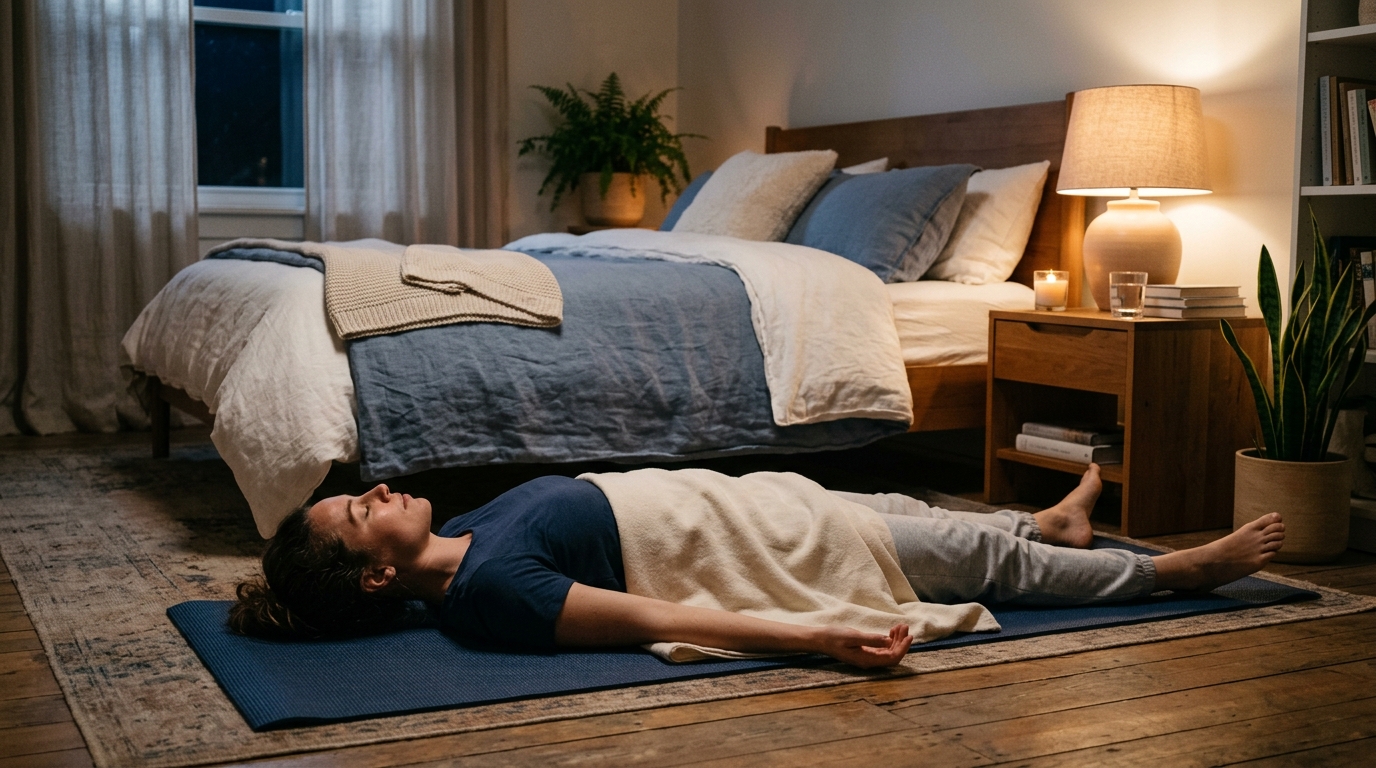
Tossing and turning all night leaves you utterly exhausted. If you struggle to quiet your mind at bedtime, incorporating Yoga for Better Sleep offers a natural, highly effective solution. This gentle practice releases physical tension and calms your nervous system.
This comprehensive guide reveals how targeted evening movements can transform your nighttime routine. You will discover 10 specific poses designed to relax the body, alongside expert tips and deep breathing techniques. By avoiding common mistakes and following these structured practices, you will learn to quiet racing thoughts and wake up fully rejuvenated.
The Science Behind Yoga for Better Sleep
Understanding the physiological impact of evening movement is the first step toward transforming your nights. When you practice Yoga for Better Sleep, you actively shift your body from the sympathetic nervous system, which drives your fight-or-flight response, into the parasympathetic nervous system, responsible for rest and digestion. This transition is crucial for anyone suffering from insomnia or nighttime anxiety. The slow, deliberate movements combined with rhythmic breathing lower your heart rate, reduce blood pressure, and decrease the production of cortisol, the primary stress hormone that keeps you awake.
Furthermore, an evening practice physically releases the muscular tension that accumulates throughout the day. When you sit at a desk or carry emotional stress, your neck, shoulders, and hips tighten. This physical discomfort acts as a subtle alarm bell, keeping your brain alert. By deliberately stretching and softening these areas, you send biological safety signals to your brain. This synergy between physical release and mental calming creates the perfect internal environment for deep, restorative slumber.
Many practitioners also find that dedicating time to their mat creates a psychological boundary between the active workday and the resting night. This transition period allows the mind to process lingering thoughts rather than bringing them into bed. By consistently engaging in sleep hygiene rituals like this, you train your brain to associate these specific stretches with impending rest, making it significantly easier to drift off naturally.
Essential Preparation Before Your Evening Practice
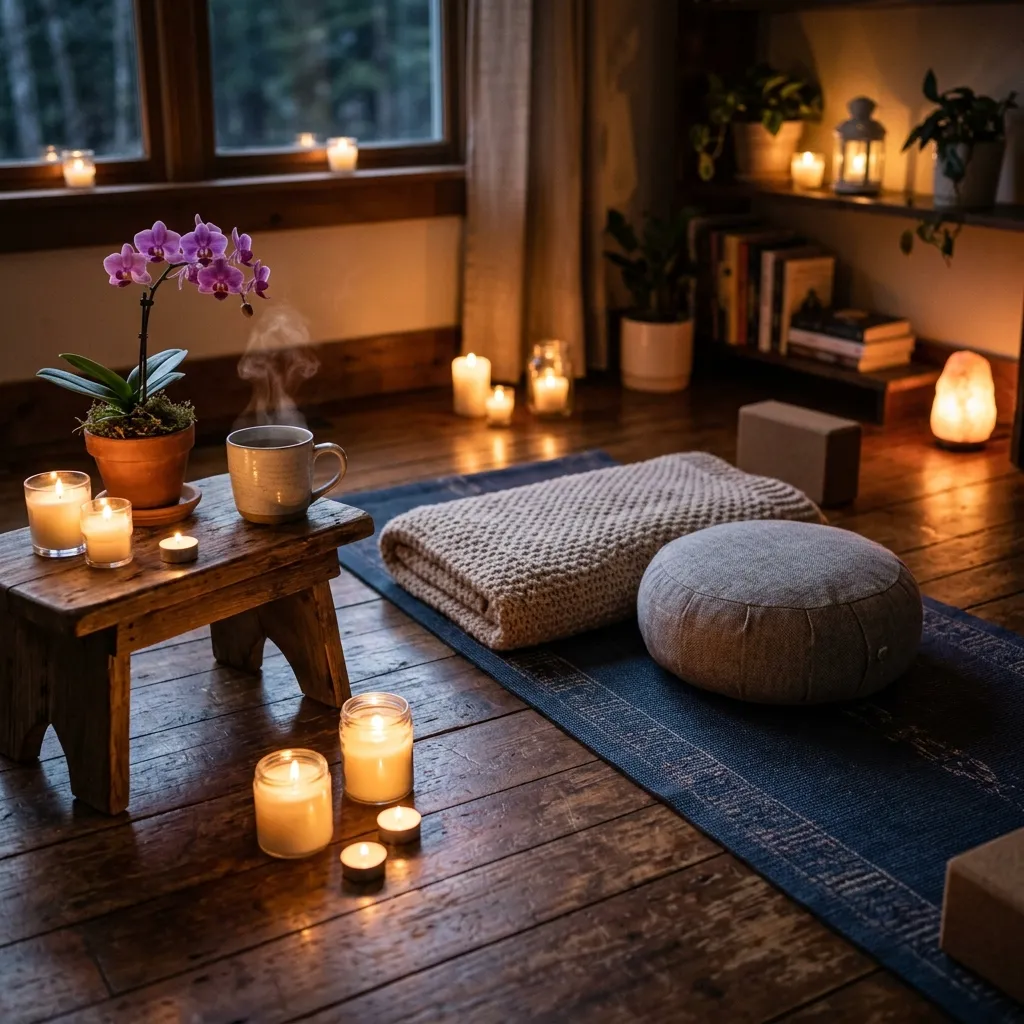
To maximize the benefits of Yoga for Better Sleep, you must prepare your physical environment and your mindset. Practicing in a bright, noisy room will counteract the calming effects of the poses. Begin by dimming the lights in your practice space at least an hour before you intend to sleep. Exposure to harsh overhead lighting, especially blue light from screens, suppresses melatonin production. Opt for soft, warm lighting from lamps or even candlelight to signal to your brain that the day is concluding.
Temperature control is another vital aspect of nervous system regulation. Your core body temperature naturally drops as you prepare for rest. Keep your room comfortably cool, but ensure your body stays warm during the practice. Wearing comfortable, loose-fitting layers allows you to adjust your temperature as needed without disrupting your flow. You should also gather your props beforehand. Having pillows, blankets, and yoga blocks within arm’s reach prevents you from having to get up and break your state of relaxation.
- Turn off all electronic devices and silence notifications to eliminate sudden distractions.
- Play soft, ambient soundscapes or binaural beats to drown out external household noises.
- Diffuse calming essential oils like lavender or chamomile to engage your olfactory senses in the relaxation process.
Preparing your mindset requires letting go of perfection. An evening practice is not about achieving the deepest stretch or the perfect alignment; it is purely about sensation and release. Approach your mat with self-compassion, allowing your breath to guide the depth of each movement.
10 Essential Poses in Yoga for Better Sleep
Integrating these specific poses into your nightly routine will dramatically improve your ability to unwind. Focus on taking long, deep breaths in each posture, holding them for one to three minutes as your comfort allows.
1. Balasana (Wide-Knee Child’s Pose)
Child’s Pose is a foundational resting posture that immediately soothes the mind. By kneeling on the floor, bringing your big toes together, and widening your knees, you create space for your torso to melt forward. Rest your forehead on the mat or a soft block. This gentle pressure on the brow stimulates the vagus nerve, which acts as the control center for your relaxation response. Stretch your arms forward or let them drape alongside your body. Breathe deeply into your back, feeling your ribcage expand and contract, which gently massages your internal organs.
2. Viparita Karani (Legs Up the Wall)
Often considered the ultimate pose in restorative yoga, Legs Up the Wall offers profound relief for tired legs and a weary mind. Sit sideways next to a wall, then carefully swing your legs up the wall as you lower your back to the floor. Your body should form an L-shape. This mild inversion reverses blood flow, reducing swelling in the lower extremities and slowing your heart rate. You can place a folded blanket under your hips for added support. Close your eyes and rest your hands on your belly to monitor your breathing.
3. Supta Baddha Konasana (Reclining Bound Angle Pose)
This posture releases deep-seated tension in the hips and groin, areas where we commonly store emotional stress. Lie flat on your back, bend your knees, and bring the soles of your feet together, allowing your knees to open outward like a book. To make this deeply relaxing, place pillows or blocks under each knee so your inner thighs do not have to work to hold the position. Rest one hand on your heart and the other on your stomach, feeling the rhythmic rise and fall of your breath.
4. Uttanasana (Standing Forward Bend with Support)
A gentle standing forward fold releases tightness in the hamstrings and lower back while encouraging blood flow to the brain. Stand with your feet hip-width apart and hinge at your hips, keeping a generous bend in your knees. Instead of reaching for your toes, let your arms dangle or hold opposite elbows. For an evening practice, rest your forehead on the seat of a chair or a stack of blocks. This support prevents strain and allows your spine to completely decompress after a long day of standing or sitting.
5. Supta Matsyendrasana (Supine Spinal Twist)
Twists are excellent for neutralizing the spine and aiding in digestion, which can often disrupt slumber. Lie on your back, hug your right knee into your chest, and gently guide it across your body toward the left floor. Extend your right arm straight out to the side and turn your gaze toward your right hand. Keep both shoulders anchored to the mat. This ringing-out motion releases the muscles along the spinal column. Hold for several breaths before slowly returning to center and repeating on the opposite side.
6. Paschimottanasana (Seated Forward Bend)
Seated forward bends are inherently introspective and calming. Sit on the edge of a folded blanket with your legs extended straight in front of you. Inhale to lengthen your spine, and exhale to gently fold forward from your hips. Do not pull or force yourself downward. Instead, let gravity do the work. You can place a rolled towel under your knees if your hamstrings feel tight, and rest your forehead on a block placed on your shins. Focus on releasing the tension in your neck and jaw as you hold the posture.
7. Janu Sirsasana (Head-to-Knee Forward Bend)
This asymmetrical forward fold targets the lower back and hamstrings one side at a time, providing a deep, grounding stretch. Sit with your left leg extended and the sole of your right foot pressed against your left inner thigh. Hinge forward over your extended left leg, resting your hands wherever they fall naturally. This pose encourages quiet reflection and helps lower blood pressure. It is particularly effective for those who carry asymmetrical tension from carrying heavy bags or sitting unevenly.
8. Ananda Balasana (Happy Baby Pose)
Happy Baby releases the lower back and opens the hips in a playful, comforting manner. Lie on your back, pull your knees toward your chest, and grip the outsides of your feet or your ankles. Open your knees slightly wider than your torso and gently pull them toward your armpits, keeping your ankles directly over your knees. Press your entire spine, including your tailbone, flat against the floor. You can gently rock side to side to massage your lower back, releasing the day’s physical burdens.
9. Savasana (Corpse Pose)
Every practice of Yoga for Better Sleep must end with Savasana. Lie completely flat on your back, extending your legs and letting your feet splay open. Rest your arms at your sides with your palms facing up to receive relaxation. To make this pose sleep-ready, place a rolled blanket under your knees to support your lower back and a small pillow under your head. Consciously scan your body from your toes to your scalp, intentionally releasing any residual gripping or holding in your muscles.
10. Chandra Bhedana (Left Nostril Breathing)
While not a physical pose, this breathing technique is a vital component of the practice. Sit comfortably or lie down. Close your right nostril gently with your thumb. Inhale slowly and deeply through your left nostril, then close the left nostril and exhale through the right. Repeat this cycle. In yogic tradition, the left nostril is associated with lunar, cooling energy. This specific breathwork rapidly activates the parasympathetic nervous system, cooling the body and completely quieting the mind before bed.
Comparing Nighttime Practices: Which Style is Right for You?
Not all evening movements are created equal. Depending on your physical condition and mental state, different styles may serve you better on different nights. Understanding these variations ensures you choose the most effective method for your specific needs.
|
Practice Style |
Primary Focus |
Best Used For |
Effort Level |
|---|---|---|---|
|
Restorative |
Deep physical relaxation using many props |
Severe physical fatigue, high stress, injury recovery |
Extremely Low |
|
Yin |
Holding deep stretches for 3-5 minutes |
Joint mobility, releasing deep fascial tension |
Low to Moderate |
|
Yoga Nidra |
Guided meditation lying in Savasana |
Racing thoughts, insomnia, profound mental exhaustion |
Zero Physical Effort |
|
Gentle Hatha |
Slow, flowing movements linking breath to motion |
Restless energy, needing to stretch out stiffness |
Moderate |
When selecting your evening approach, listen to your body. If your mind is racing but your body feels heavy, Yoga Nidra is highly effective. If your body feels tight and restless, a gentle Hatha flow followed by Yin stretches might be the perfect remedy to prepare you for bed.
Common Mistakes to Avoid When Practicing Before Bed
Even with the best intentions, certain mistakes can inadvertently energize your body, defeating the purpose of your evening routine. Recognizing and avoiding these pitfalls ensures your practice remains a catalyst for rest rather than a source of stimulation.
The most frequent mistake is incorporating deep backbends into a nighttime routine. Poses like Wheel, Camel, or even a deep Bow pose are highly stimulating to the nervous system. They open the chest and increase the heart rate, providing a surge of energy that is perfect for the morning but disastrous for the evening. Stick to forward folds and gentle twists, which inherently promote introspection and physiological calming.
- Pushing into pain or deep discomfort; your evening practice should feel like a soothing massage, not a strenuous workout.
- Holding your breath during poses; restricted breathing triggers the body’s stress response and increases anxiety.
- Checking your phone or looking at the clock during your practice, which breaks your focus and reintroduces blue light exposure.
Another critical error is practicing too soon after eating a heavy dinner. Engaging in twists and forward folds with a full stomach causes acid reflux and profound physical discomfort, which will absolutely disrupt your ability to fall asleep. Aim to finish your last large meal at least two to three hours before rolling out your mat. If you need a snack, opt for something light and easily digestible.
Expert Insights and Pro Tips for Deep Rest
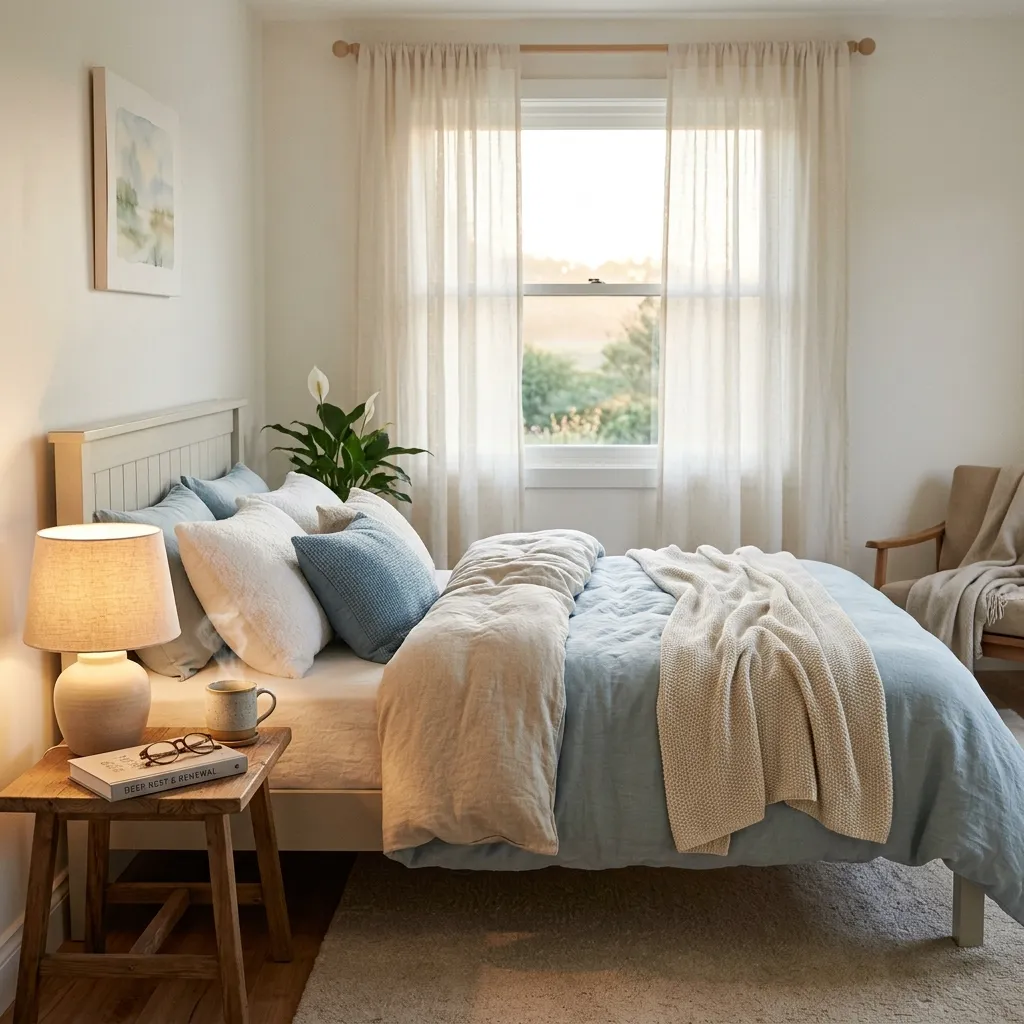
To elevate your experience with Yoga for Better Sleep, expert instructors recommend viewing your practice not as an exercise, but as a deliberate transition ritual. The goal is to bridge the gap between doing and being. One pro tip is to practice directly in your bed. Doing poses like Legs Up the Wall (using your headboard) or Reclining Bound Angle directly on your mattress means that when you finish, you do not have to move. You can simply pull up the covers and drift away.
Consistency is more important than duration. Practicing for ten minutes every single night yields far better results for your circadian rhythm than practicing for an hour once a week. Your brain loves predictability. When you establish a consistent, brief sequence, your neurological pathways adapt, recognizing these specific physical movements as the definitive signal that it is time to shut down for the night.
Finally, incorporate mindfulness meditation elements into your physical movements. As you hold each pose, observe the quality of your thoughts without judgment. If you find your mind wandering to tomorrow’s to-do list, gently acknowledge the thought and firmly guide your attention back to the sensation of the breath entering and leaving your nostrils. This mental discipline prevents anxiety from hijacking your evening, allowing the profound benefits of your physical practice to take deep root.
Conclusion
Committing to Yoga for Better Sleep empowers you to reclaim your nights and wake up feeling truly refreshed. By thoughtfully integrating these gentle poses, focusing on your breath, and maintaining a calming environment, you signal to your body that it is safe to rest. Roll out your mat tonight, release the day’s burdens, and experience the profound tranquility of a well-deserved slumber.
FAQ
1. How long before bed should I practice these poses?
It is ideal to practice these relaxing poses 30 to 60 minutes before you intend to go to sleep. This timing allows your heart rate to lower, your nervous system to fully transition into a resting state, and gives you a buffer to transition quietly from your mat to your bed without rushing.
2. Do I need any special equipment to practice at night?
No special equipment is required, though props can significantly enhance your comfort. You can easily substitute traditional blocks and bolsters with items you already have at home, such as thick books, firm bed pillows, and folded bath towels, to support your joints during long holds.
3. Can I do this practice directly in my bed?
Yes, many people prefer practicing directly in bed. Poses like Happy Baby, Reclining Bound Angle, and Corpse pose work beautifully on a mattress. Practicing in bed eliminates the need to stand up and walk after you have achieved a state of deep relaxation.
4. What should I do if my mind keeps wandering during the poses?
It is completely normal for the mind to wander. When it happens, do not get frustrated. Simply acknowledge the thought and gently redirect your focus back to the physical sensation of your breath moving through your body or the feeling of the floor supporting your weight.
5. Are there any poses I should strictly avoid at night?
You should avoid any highly stimulating or heat-building poses before bed. This includes deep backbends like Wheel or Camel pose, intense inversions like headstands, and rigorous core work or vinyasa flows, as these will elevate your heart rate and energize your nervous system.
6. How long should I hold each pose for maximum relaxation?
For a nighttime routine, aim to hold each pose for 1 to 3 minutes, or roughly 10 to 30 deep breaths. The goal is not to push your flexibility, but to hold the posture long enough for the muscle fibers to gently relax and the nervous system to calm down.
7. What is the best breathing technique to use during this routine?
Diaphragmatic breathing, or belly breathing, is highly recommended. Focus on making your exhales slightly longer than your inhales (for example, inhaling for a count of 4 and exhaling for a count of 6). This extended exhalation rapidly stimulates the vagus nerve and promotes relaxation.
8. Will this practice help if I suffer from chronic insomnia?
While it is not a cure-all, a consistent evening practice is a powerful complementary tool for managing insomnia. By regularly lowering cortisol levels and releasing physical tension, you create a much more favorable internal environment for sleep, which can significantly reduce the severity of insomnia over time.
9. Should I keep my eyes open or closed?
Keeping your eyes closed or maintaining a very soft, unfocused gaze is best. Closing your eyes removes visual stimulation from your environment, allowing you to turn your awareness inward and focus entirely on the physical and mental sensations of the practice.
10. Can beginners do this nighttime routine?
Absolutely. The poses selected for a nighttime routine are generally foundational and very accessible. Because the goal is relaxation rather than physical achievement, beginners can easily modify the depth of the poses using pillows and blankets to ensure they feel completely supported and pain-free.
Tags: Yoga, Wellness, Sleep, Mindfulness, Health
