


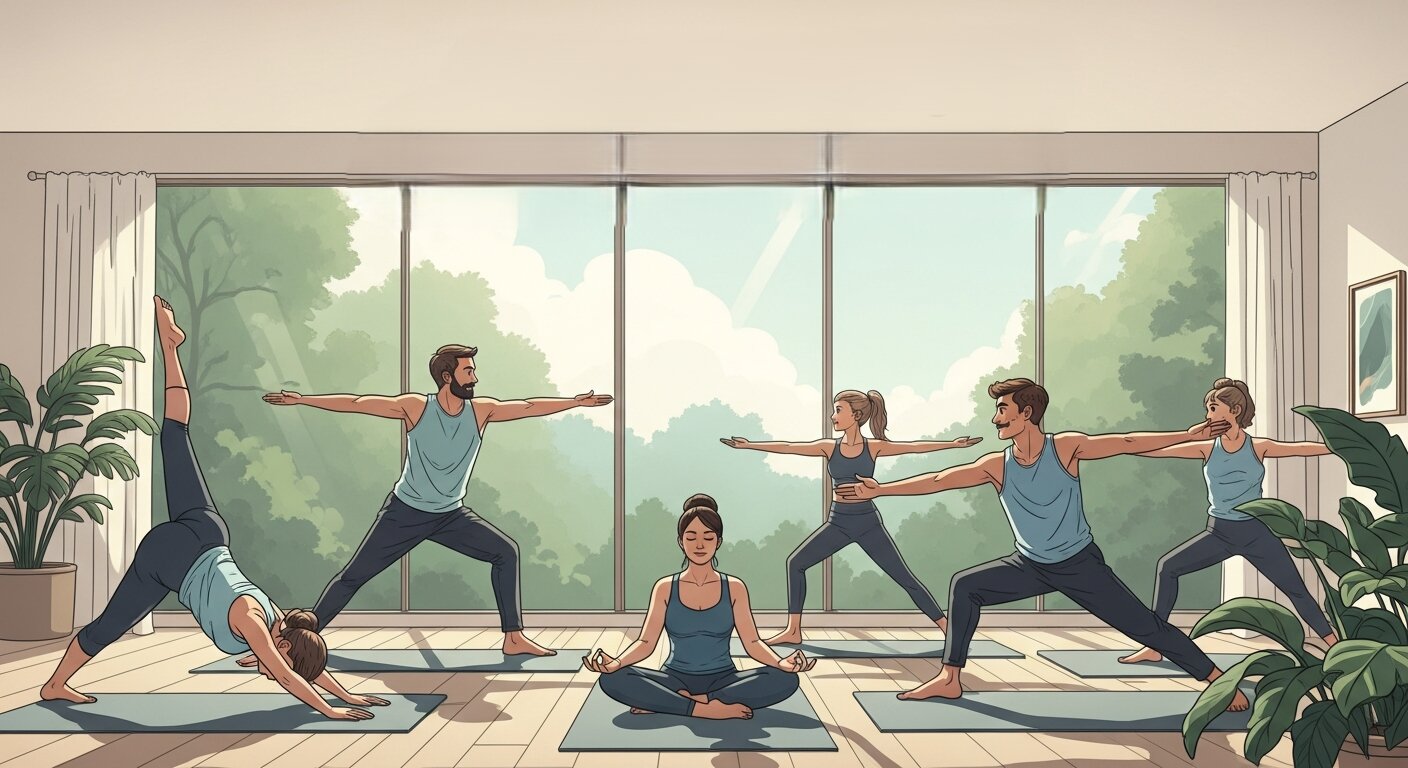
Ready to transform your well-being? Establishing a consistent yoga practice unlocks incredible physical and mental benefits. Discover the exact steps to build a sustainable, rewarding routine effortlessly.
This comprehensive guide provides an actionable roadmap for mastering your daily flow. You will learn how to overcome common barriers, design a personalized routine, avoid frequent mistakes, and stay motivated. Implement these proven strategies to achieve lasting physical health, mental clarity, and emotional balance.
The True Value of Stepping Onto Your Mat Regularly
Building a daily habit fundamentally shifts how you interact with your mind and body. While attending an occasional class feels great, the compounding benefits of showing up for yourself repeatedly cannot be overstated. When you commit to a routine, you transition from merely exercising to genuinely nurturing your holistic health.
Regular movement hydrates your joints, strengthens your muscles, and profoundly calms your nervous system. By making this a non-negotiable part of your schedule, you teach your brain that your personal wellness takes priority. Over time, you will notice increased flexibility not just in your hamstrings, but in how you handle daily stressors. We encourage you to explore our stress management strategies to complement this newfound physical resilience.
Physical Transformation and Injury Prevention
A dedicated routine ensures your muscles receive regular engagement and stretching, which dramatically reduces the risk of injury. Sitting at a desk for eight hours causes muscle shortening, particularly in the hip flexors and chest. By practicing regularly, you counteract this physical stress. You build core stability that supports your spine and improves your posture.
Mental Clarity and Emotional Regulation
Beyond the physical stretch, regular movement functions as a moving meditation. The breath-to-movement connection forces your brain to stay present. This continuous mindfulness practice lowers cortisol levels and significantly reduces feelings of anxiety. When you dedicate time to your mat every single day, you create a reliable anchor that grounds you regardless of what chaos happens outside your home.
Breaking Down the Barriers to Your Daily Flow

Most people genuinely want to practice daily but find themselves derailed by predictable obstacles. Identifying these hurdles before they trip you up is a vital part of your success roadmap.
The “All or Nothing” Trap
Many practitioners believe that if they cannot complete a full 60-minute vigorous sequence, they should not bother practicing at all. This mindset destroys consistency. Your body benefits immensely from even ten minutes of gentle stretching. We highly recommend reviewing our beginner yoga poses to find short, effective movements you can do in under fifteen minutes.
Time Management and Scheduling Conflicts
Time remains the most frequently cited excuse for skipping a session. You must stop waiting to “find” time and instead choose to “make” time. Assess your daily schedule honestly. Can you wake up fifteen minutes earlier? Can you use half of your lunch break to stretch? Shifting your perspective on time management guarantees better results.
Mini-Conclusion: Overcoming these barriers requires a mental shift. When you stop demanding perfection and start valuing small, incremental efforts, you pave the way for a sustainable, lifelong habit.
Your Step-by-Step Success Roadmap
Creating a habit requires more than just willpower; it requires a strategic framework. Follow these exact steps to ensure your new routine sticks.
Step 1: Define Your “Why”
Without a clear underlying motivation, your commitment will fade as soon as you feel tired. Ask yourself why you truly want this habit. Do you want to eliminate lower back pain? Do you want to cultivate patience for your children? Write down your specific reason and place it near your mat. When your alarm rings early in the morning, this visual reminder will give you the push you need.
Step 2: Start Exceptionally Small
Motivation operates like a wave; it crashes and recedes. Relying on high motivation to complete a 90-minute sequence every day will lead to burnout. Start by committing to just five minutes a day. Roll out your mat, sit down, and take ten deep breaths. If you want to do more after those breaths, you can. If not, you successfully completed your daily goal. This micro-commitment builds incredible self-trust.
Step 3: Designate Your Sacred Space
You do not need an enormous, perfectly decorated room to practice. You only need a space large enough to roll out your mat. Clear a specific corner of your bedroom or living room. Keep your mat, blocks, and a strap in this exact spot. Removing the friction of having to move furniture or search for your gear makes it significantly easier to start your flow. Check out our yoga equipment guide for tips on selecting the best props for your space.
Step 4: Schedule It Like a Vital Meeting
Treat your practice time with the same respect you give to a meeting with your boss. Block the time out on your digital calendar. Set an alarm. If someone asks you to do something during that window, politely decline and offer an alternative time. Protecting your boundaries is the highest form of self-care.
Step 5: Anchor the Habit
Habit anchoring involves attaching your new desired behavior to an existing automatic behavior. For example, if you drink coffee every morning, anchor your practice to that habit. Tell yourself, “After I start the coffee maker, I will do five minutes of sun salutations.” The existing habit acts as an automatic trigger for your new routine.
Designing a Routine That Fits Your Lifestyle

Your routine must adapt to your specific life circumstances, energy levels, and goals. A rigid schedule often leads to failure, whereas a flexible, adaptable approach guarantees longevity.
Morning vs. Evening Flows
Determine when your energy peaks. Morning practices offer a phenomenal way to invigorate your body, set a positive intention for the day, and check your workout off your list before distractions arise. Focus on chest-opening postures and energizing backbends.
Conversely, evening practices help you decompress from the day. If you struggle to fall asleep, a nighttime routine featuring forward folds, gentle twists, and Yin postures will signal to your nervous system that it is time to rest. You can even read our guide on better sleep hygiene to pair with your evening stretches.
Blending Styles for Ultimate Balance
Doing the exact same sequence every day can lead to overuse injuries and sheer boredom. Mix up your styles to keep your body guessing and your mind engaged.
- Vinyasa: Use this for cardiovascular health, building heat, and connecting breath to dynamic movement.
- Hatha: Choose this when you want to focus on alignment, hold postures longer, and build muscular endurance.
- Yin/Restorative: Implement these styles on your rest days to deeply stretch your fascia and calm your mind.
Comparison Table: Studio Classes vs. Home Practice
Deciding where to practice impacts your consistency. Use this table to understand the benefits of both approaches and find your perfect balance.
|
Feature |
Home Practice |
Studio Classes |
|---|---|---|
|
Cost |
Free or low-cost (online subscriptions). |
Higher cost (memberships or drop-in fees). |
|
Convenience |
Zero commute time; practice whenever you want. |
Requires travel time and adhering to a set schedule. |
|
Customization |
Tailor every pose strictly to your body’s daily needs. |
Follow a generalized sequence designed for a group. |
|
Community |
Mostly solitary (unless doing live virtual classes). |
High community engagement and social support. |
|
Guidance |
Requires self-motivation and self-awareness. |
Hands-on adjustments and direct teacher supervision. |
Mini-Conclusion: The most successful practitioners often utilize a hybrid approach. They maintain their daily discipline at home while attending a studio once a week to receive alignment cues and connect with their local community.
Expert Insights and Pro Tips for Longevity
To truly master your daily routine, you need to think like a seasoned professional. Here are expert strategies to keep your practice thriving for decades.
- Focus on the Minimum Effective Dose: Do not obsess over maximum effort. Focus on the minimum amount of movement required to keep your body feeling good. Some days, this means just doing a few rounds of Cat-Cow.
- Embrace the “Messy” Practice: Your environment will not always be perfectly quiet. Your dog might lick your face during Downward Dog. Your kids might interrupt your meditation. Embrace the chaos. Learning to find inner peace amidst external noise is the ultimate goal of yoga.
- Invest in Quality Gear: A mat that causes you to slip ruins the experience. Invest in a high-quality, non-slip mat that makes you excited to practice.
- Ditch the Ego: Stop comparing your current abilities to what you could do ten years ago, or what the person next to you can do. Your mat is a mirror for self-inquiry, not a stage for performance.
Common Mistakes to Avoid on Your Mat
Even well-intentioned practitioners fall into traps that hinder their progress. Avoid these frequent missteps to ensure a safe and effective journey.
Pushing Through Sharp Pain
You must learn to distinguish between the discomfort of a deep stretch and the sharp, localized pain of an impending injury. Never push through joint pain. If your knee, shoulder, or lower back feels a pinching sensation, immediately back out of the posture. Use props generously to support your body.
Holding Your Breath
When a posture gets difficult, humans naturally hold their breath to brace themselves. This completely defeats the purpose of the practice. Your breath serves as your internal gauge. If you cannot breathe smoothly and deeply in a pose, you have gone too deep. Ease up until your breath flows naturally again.
Skipping Savasana
Corpse Pose (Savasana) is the most critical part of your session. Skipping it to rush off to your next task deprives your nervous system of the chance to integrate the physical work you just did. Always leave at least two to three minutes at the end of your session to lie completely still and absorb the benefits.
Listening to Your Body: Managing Aches and Burnout
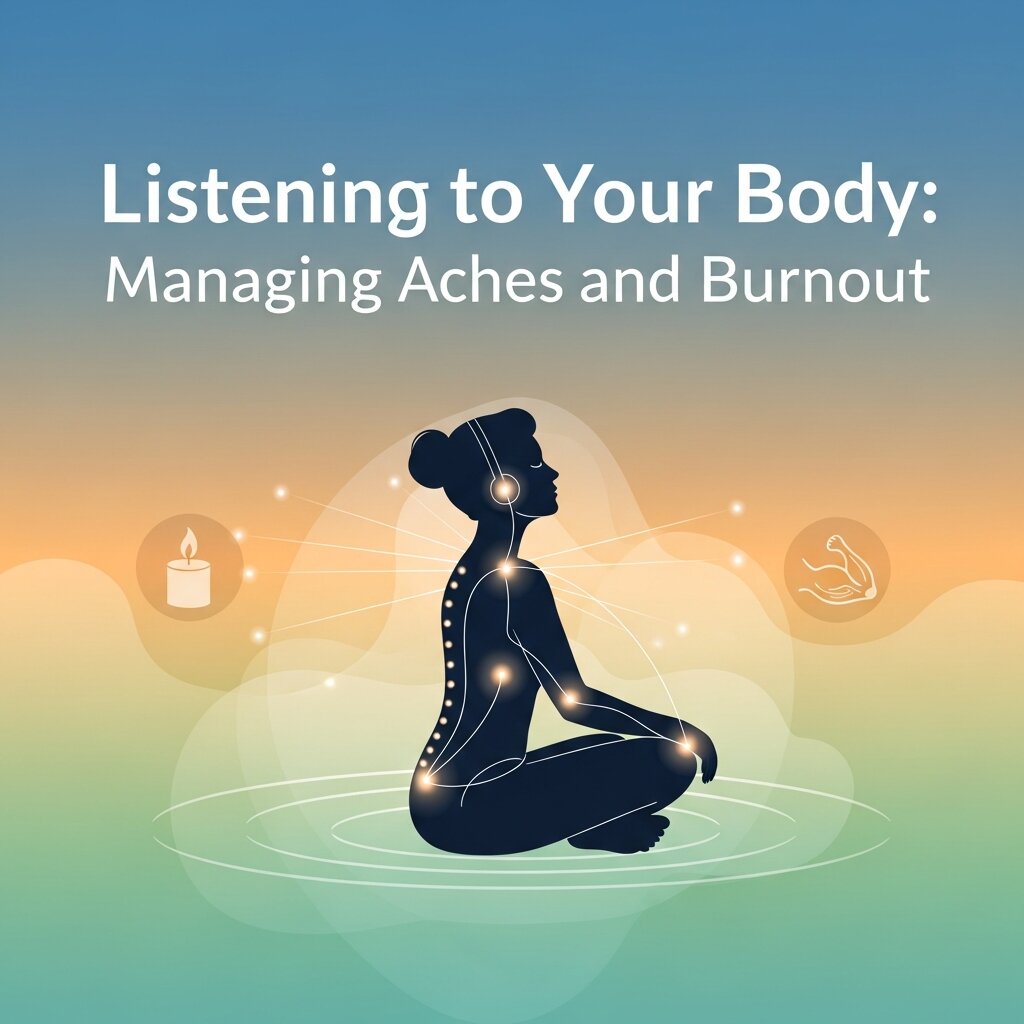
Consistency does not mean ignoring your body’s signals for rest. True discipline involves knowing when to push and when to pause.
If you wake up feeling physically exhausted or fighting off an illness, forcing a sweaty, high-intensity flow will only deplete your immune system further. On these days, your practice should evolve. Swap your vigorous standing sequence for a gentle, restorative session using bolsters and blankets.
Mental burnout happens when your routine feels like a chore rather than a privilege. If you feel resentful toward your mat, change your environment. Take your mat outside to the grass, try a completely new style of movement, or simply sit in meditation instead of doing physical postures. Flexibility in your approach ensures you never completely abandon your habits. Read our meditation techniques for alternative ways to stay mindful without physical exertion.
Tracking Progress and Celebrating Milestones
Humans thrive on positive reinforcement. Tracking your progress gives you tangible proof of your dedication, which fuels future motivation.
Keep a simple calendar on your wall and place a checkmark on the days you practice. Seeing a long visual chain of checkmarks provides a powerful psychological boost; you will not want to break the chain.
Additionally, celebrate your non-scale victories. Notice how your breathing feels more expansive. Acknowledge how you reacted calmly to a stressful email instead of snapping. Celebrate the fact that your lower back no longer aches when you wake up. These quiet victories represent the profound, life-changing magic of regular practice.
Conclusion
Maintaining a consistent yoga practice deeply transforms your physical and mental health. By starting small, setting clear intentions, and honoring your body, you build a lasting habit. Roll out your mat today and experience the profound benefits. Subscribe to our newsletter for more weekly wellness tips and guided flows!
Frequently Asked Questions
1. How many times a week should I practice yoga to see results?
You will see the best results by practicing at least three to four times a week. However, even practicing for ten minutes every single day yields better physical and mental benefits than one intense 90-minute session once a week. Frequency matters more than duration.
2. Can a beginner build a home practice without going to a studio?
Absolutely. Countless high-quality, free online resources and applications cater specifically to beginners. Start with foundational videos that explain alignment safely, use props, and listen to your body closely to avoid injury as you learn the basics at home.
3. What is the best time of day to unroll my mat?
The best time of day is the time you can realistically commit to. Morning practices energize you for the day, while evening practices help wind down your nervous system. Experiment with both to see which time aligns best with your natural energy levels and daily schedule.
4. Do I need expensive props to practice at home?
No, you do not need expensive props. While a good non-slip mat is highly recommended for safety, you can easily substitute blocks with thick books, and you can use a towel or a belt instead of a specialized yoga strap.
5. How do I stay motivated when I feel tired or sore?
When you feel tired, negotiate with yourself. Commit to simply sitting on your mat for three minutes of deep breathing. Often, once you are on the mat, you will naturally want to do some gentle stretching. If not, honor your body’s need for rest without guilt.
6. Is it normal to feel emotional during certain poses?
Yes, it is incredibly common. The body stores physical tension and emotional stress in the tissues, particularly in the hips and shoulders. Deeply opening these areas can trigger emotional releases. Allow the feelings to pass without judgment.
7. Should I do yoga before or after my other workouts?
It depends on your goals. Doing a dynamic flow before a workout acts as an excellent warm-up to increase blood flow and mobility. Doing a slow, deep-stretching session after a workout helps flush lactic acid and aids in muscle recovery.
8. Why do my wrists hurt during Downward Facing Dog?
Wrist pain usually occurs from dumping all your body weight into the heels of your hands. To fix this, spread your fingers wide and press firmly into your knuckles and fingertips, creating a slight suction cup effect in the palm to distribute the weight evenly.
9. Can I build strength with yoga, or is it just for flexibility?
You absolutely build strength. Holding your own body weight in poses like Plank, Chaturanga, and Warrior postures builds significant muscular endurance, core stability, and functional strength without the need for external weights.
10. What should I do if I miss a few days of practice?
Forgive yourself immediately and get back on the mat. Beating yourself up creates negative associations with your practice. Acknowledge the break, roll out your mat, and start with a short, easy session to gently reintroduce the habit into your life.
