

Are you ready to deepen yoga practice? Transforming your routine from a simple physical workout into a profound mind-body connection requires intention, consistency, and proper techniques. Whether you’re a curious beginner or an experienced yogi aiming to reach new levels, this step-by-step guide will help you evolve.
This comprehensive guide reveals exactly how to elevate your flows. You will discover actionable strategies spanning foundational alignment, advanced asanas, breathwork mastery, and yogic philosophy. Unlock your full potential, prevent injuries, and build a sustainable routine that truly transforms your life—both on and off the mat. Along the way, you’ll gain insights from experts, avoid common pitfalls, and seamlessly integrate yoga into your lifestyle for long-term growth and fulfillment.
Why You Should Deepen Yoga Practice
When you deepen yoga practice, you move beyond merely replicating shapes. You begin to understand the mechanics of your body, the rhythm of your breath, and the fluctuations of your mind. A mature practice offers benefits that permeate every aspect of your life, from reduced stress and enhanced focus to greater physical mobility and emotional resilience.
Physical Transformation
Yoga’s physical benefits, such as improved strength, flexibility, and balance, are well-known. But going deeper brings even more:
- Injury prevention: Refined awareness and alignment reduce the risk of strain.
- Core stability: Advanced practice integrates deep core engagement for better posture.
- Postural improvement: Everyday movement becomes more graceful and efficient.
Mental and Emotional Growth
True depth in yoga involves far more than the physical form. A committed practice improves:
- Stress management: Conscious breathing lowers cortisol and relaxes the nervous system.
- Focus and clarity: Mindful movement and meditation strengthen concentration.
- Emotional regulation: A steady practice cultivates resilience, patience, and compassion.
Spiritual Expansion
For many, yoga becomes a path toward greater self-understanding:
- Presence and mindfulness: Each session becomes meditation in motion.
- Inner peace: Regular practice fosters equanimity, happiness, and a sense of purpose.
To achieve all this, you must treat your practice as an ongoing study rather than a static routine. According to the Yoga Alliance, continuous education and mindful progression are key components of a safe and effective yoga journey. Embracing lifelong learning ensures that your yoga journey is both enriching and sustainable.
From Beginner to Intermediate: Building the Foundation
Understanding Basic Principles
Before attempting complex arm balances or deep backbends, you must solidify your foundation. Most seasoned yogis agree that the basics hold the key to longevity and progress.
Focus on Alignment Over Depth
Many practitioners rush to touch their toes or achieve the “full expression” of a pose. Instead, prioritize skeletal alignment and muscular engagement, which lays the groundwork for more advanced movements.
- Engage your core: Protect your lower back in standing poses and transitions. Connection to your center is key for balance and safety.
- Distribute weight evenly: In poses like Downward Dog, press firmly through all four corners of your hands and feet, creating full-body integration.
- Micro-bend joints: Avoid locking your knees and elbows to prevent joint strain and potential injury.
- Lengthen your spine: In every pose, prioritize spinal elongation over forceful stretching.
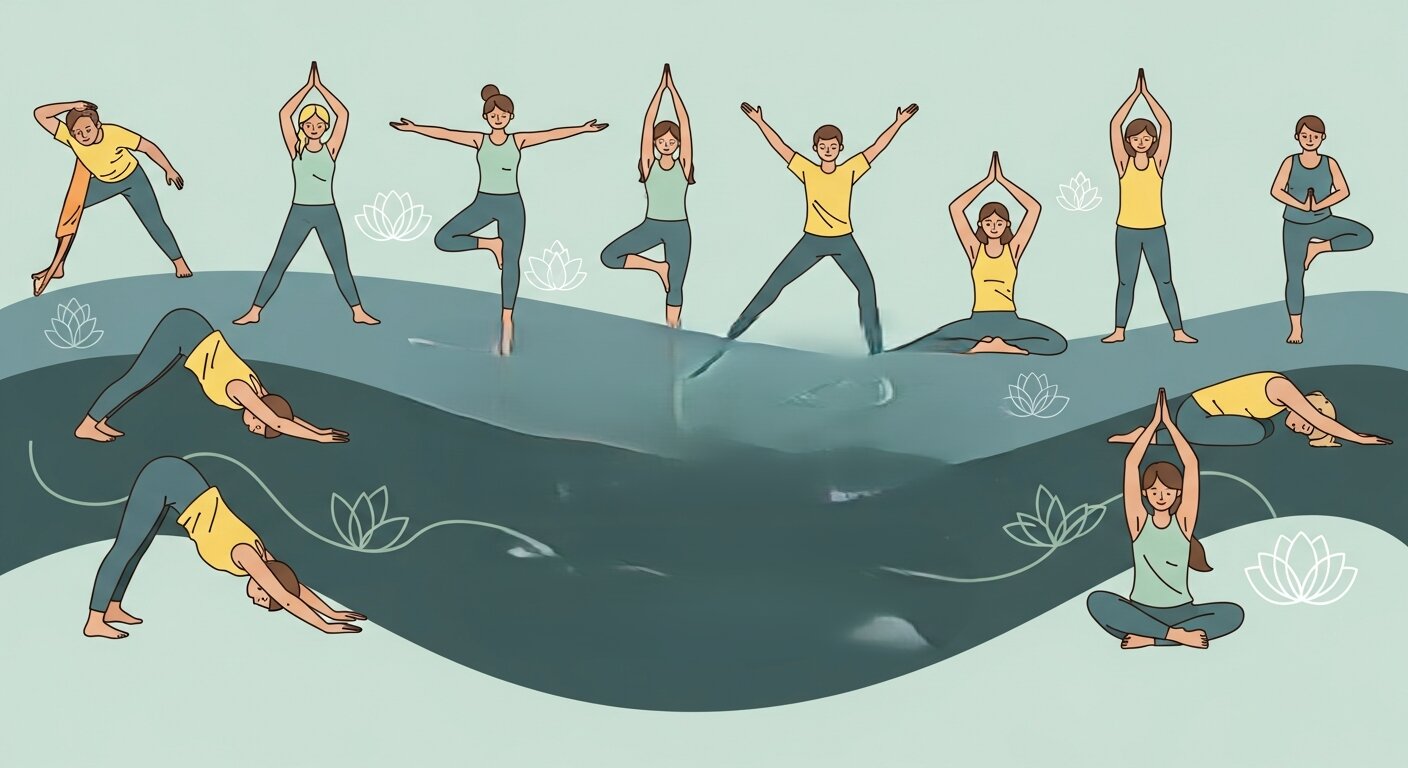
If you struggle with alignment, reviewing foundational yoga poses—such as Tadasana (Mountain Pose), Adho Mukha Svanasana (Downward Dog), and Virabhadrasana (Warrior)—can help you establish correct habits early on. Videos, workshops, and classes focused on alignment are also extremely helpful.
Integrate Breath and Movement (Vinyasa)
Breath is the bridge between the physical and mental aspects of yoga. Moving without breath awareness is simply stretching. Moving with breath awareness is yoga. Practice Ujjayi (Victorious) breath to build internal heat and maintain focus. Inhale to expand and lift; exhale to ground and fold.
- Match breath to movement: Sync each transition with an inhale or exhale.
- Practice conscious breathing during static poses: Notice how breath brings depth and awareness.
- Experiment with Vinyasa flow: Link a series of poses together with your breath for a moving meditation.
These skills create a strong base from which you can safely and confidently progress.
Daily Routine: Building Consistency
Success in yoga comes from regular practice rather than sporadic intensity.
- Set realistic goals: Start with 15-20 minute daily sessions.
- Create a designated practice space: Even a small, quiet area in your home helps.
- Track your progress: Journaling or using an app can motivate you to stay consistent.
For more foundational guidance and tips for new practitioners, explore our beginner yoga sequences for structured, safe progression.
Advancing Your Journey: Techniques for Experienced Yogis
Once your practice foundation is set, you’re ready to go deeper. This means moving beyond the physical, integrating subtle techniques, and challenging yourself in new ways.
Explore Pranayama and Meditation
Asanas (physical postures) represent just one of the Eight Limbs of Yoga outlined by Patanjali. To truly evolve, dedicate time to Pranayama (breath control) and Dhyana (meditation).
- Nadi Shodhana (Alternate Nostril Breathing): Balances the nervous system and harmonizes both hemispheres of the brain. Useful before or after practice to calm the mind.
- Kapalabhati (Skull Shining Breath): Energizes the mind and clears the respiratory system. Start with short rounds, gradually increasing.
- Bhramari (Bee Breath): Reduces anxiety and quiets mental chatter through vibration.
- Vipassana Meditation: Cultivates deep awareness and presence. Sit quietly, observe sensations and thoughts without judgment.
- Loving-kindness meditation (Metta): Fosters empathy and loving awareness for self and others.
Exploring advanced meditation techniques will significantly enhance your time on the mat. Just 5-10 minutes a day can lead to profound clarity and peace over time.
Master Advanced Asanas Safely
- Advanced postures offer exciting challenges but require patience, strength, and mobility. They also demand humility, as progress can be slow and setbacks common.
- Assess your prerequisites:
- Develop strong foundational strength (especially core and shoulders).
- Test hip and back flexibility before attempting deeper splits or backbends.
- Use props:
- Blocks help in half-moon and splits.
- Straps extend reach in seated forward folds.
- Bolsters support restorative postures and backbends.
- Seek guidance:
- Practice under the supervision of a certified instructor when attempting inversions or deep backbends.
- Attend workshops to refine your technique.
- Break down complex poses into steps:
- For example, before Handstand, master Plank, Downward Dog, Dolphin, and shoulder mobility exercises.
- In Wheel Pose (Urdhva Dhanurasana), practice Bridge Pose and shoulder openers first.
- Listen to your body:
- Never force an asana. Back out if you feel sharp pain or dizziness.
Incorporate Yogic Philosophy
True advancement is not measured by physical achievement alone but by inner transformation.
- Study the Yoga Sutras or the Bhagavad Gita. These ancient texts offer perspective on ethics (yamas and niyamas), personal growth, and spiritual insight.
- Live your yoga: Embody principles like ahimsa (non-violence), aparigraha (non-possessiveness), and svadhyaya (self-study) in daily life.
- Attend monthly satsangs (community discussions): These foster learning and connection beyond the physical practice.
Internalizing yogic philosophy is key for transitioning from intermediate yoga to a truly advanced journey.
Beginner vs. Advanced Practice Mindset
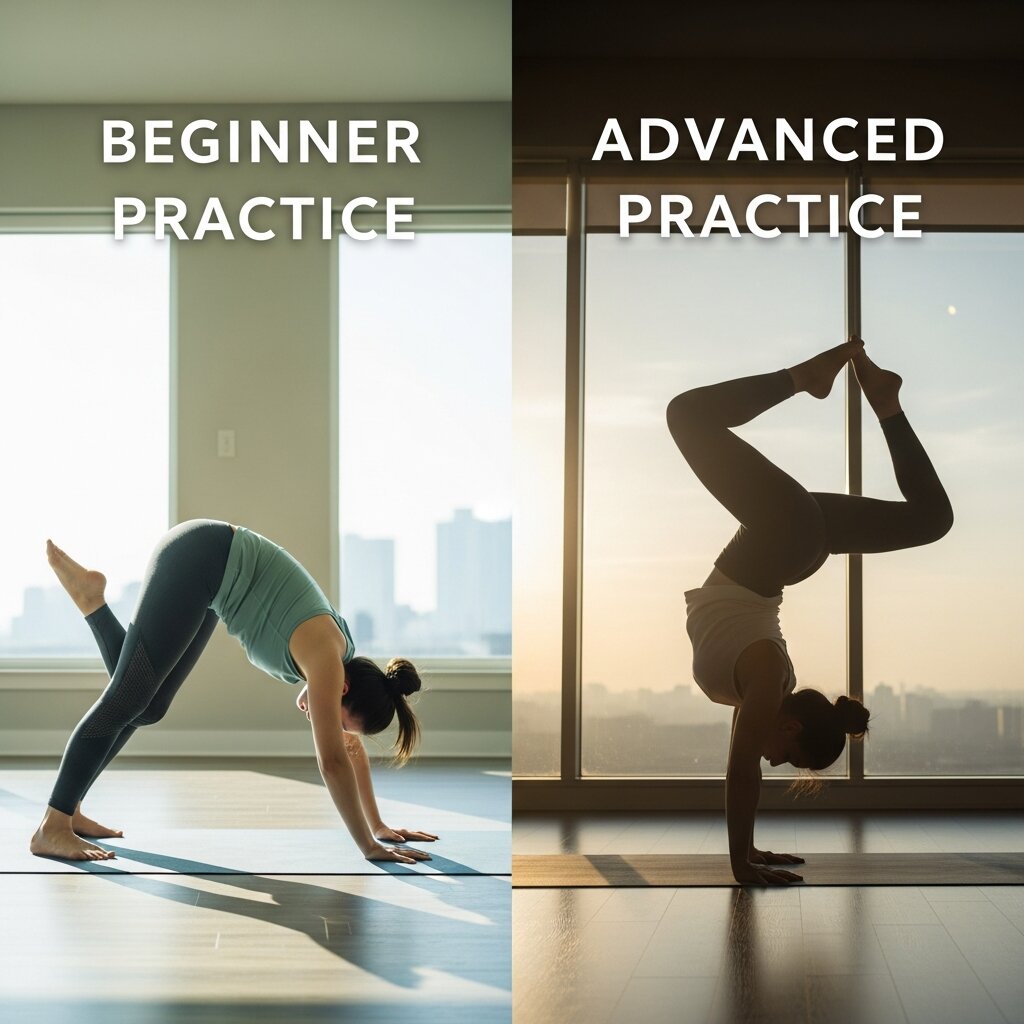
A shift in mindset is what separates beginners from long-term practitioners. This comparison table highlights those differences:
|
Feature |
Beginner Mindset |
Advanced Mindset |
|---|---|---|
|
Focus |
Achieving the visual shape of a pose |
Feeling the internal sensation and breath |
|
Pace |
Rushing through transitions |
Moving with intentional control |
|
Props |
Views props as a weakness |
Uses props to enhance alignment |
|
Learning |
Follows external cues |
Listens deeply to inner guidance |
|
Consistency |
Sporadic practice based on motivation |
Dedicated daily practice based on discipline |
|
Goal |
Flexibility or strength gains |
Lifelong discovery and balance |
Comparison Table: Popular Paths to Deepen Yoga Practice
To help you choose the best approach for your needs, here’s a structured comparison:
|
Pathway |
Focus & Advantage |
Who It’s For |
Example Practices |
|---|---|---|---|
|
Power Yoga |
Strength, fitness, endurance |
Athletic, energetic types |
Vinyasa, HIIT yoga hybrids |
|
Restorative/Yin Yoga |
Flexibility, deep relaxation |
Stressed, injured, beginners |
Long-held passive poses, breathwork |
|
Traditional Hatha Yoga |
Balance, alignment, breath |
All-levels, classical learners |
Integrated poses, slow flows |
|
Hot Yoga/Bikram |
Detox, stamina, calorie burn |
Heat-tolerant, motivated |
Set series in heated room |
|
Mindful Yoga & Meditation |
Focus, mental peace, awareness |
Spiritual seekers, busy minds |
Slow flows, extended meditations |
By exploring different paths, you can tailor your journey to fit your evolving needs. For structured recommendations and progressive routines, visit our yoga program reviews section.
Common Mistakes to Avoid
Even dedicated practitioners fall into traps that hinder their progress. Avoid these common pitfalls to ensure your growth remains safe and joyful:
- Comparing yourself to others: Your anatomy is unique. What looks easy for someone else might be anatomically impossible for you. Yoga is not a competition; honor your own journey.
- Ignoring pain: Discomfort is normal; sharp pain is a warning sign. Never push through joint pain or numbness.
- Skipping Savasana: The final resting pose allows your nervous system to integrate the benefits of your practice. Do not skip it, even when short on time.
- Neglecting recovery: Incorporate rest days and explore restorative yoga routines to balance intense physical exertion. Recovery enhances growth and prevents burnout.
- Overtraining or practicing advanced poses too soon: Trying to rush progression can result in injury and setbacks. Respect your current level and celebrate incremental achievements.
- Forgetting breath connection: Physical movements without mindful breath lose much of yoga’s intended benefit.
- Disregarding guidance: Ignoring certified teachers and skipping beginner instructions increases injury risk.
Refer to our in-depth resource on injury prevention in yoga for more strategies to keep your practice sustainable.
Expert Insights and Pro Tips
To consistently progress, top yoga instructors recommend adopting a beginner’s mind, no matter how long you have practiced. Growth is a continuous journey, not a destination.
- Film yourself: Recording your practice allows you to spot alignment issues you cannot feel—an invaluable learning tool.
- Hold poses longer: Instead of flowing quickly, hold postures for 10-15 breaths to build endurance and mental fortitude. Longer holds target deeper muscle layers and improve focus.
- Study anatomy: Understanding how your muscles and fascia interact will revolutionize how you approach every asana. Reading authoritative texts from sources like the International Association of Yoga Therapists provides invaluable context.
- Participate in workshops and retreats: Dedicated time with expert teachers accelerates breakthroughs, both physically and mentally.
- Commit to self-care rituals: Apply Ayurveda, massage, and nutrition tips to nourish your body alongside your yoga.
- Build a support network: Practicing with a group—or even digitally—offers encouragement and accountability.
Apply these pro tips for exponential progress. Be sure to check our section on yoga lifestyle habits for a holistic approach.
Conclusion
It takes patience, persistence, and daily dedication to deepen yoga practice, but the holistic physical and mental rewards are truly life-changing. By applying these expert techniques, building healthy routines, and always honoring your body’s unique needs, you’ll unlock the full power of yoga. Are you ready to transform your routine? Unroll your mat today and experience mindful movement—your journey starts now. Join our growing community and share your progress!
Frequently Asked Questions
1. How often should I practice to see improvements?
Consistency matters more than duration. Practicing for 20–30 minutes daily will yield better results than a single marathon session per week. Aim for at least 3–4 sessions weekly to build muscle memory and flexibility. Even short, mindful practices make a difference over time.
2. What is the best time of day to do yoga?
The best time is whenever you can commit regularly. Morning sessions energize and set a positive tone for the day, while evening practice helps decompress and aids sleep. Ultimately, consistency and comfort are more important than timing.
3. Do I need to be flexible already to deepen my practice?
No. Flexibility comes with practice. Focus on alignment, breath, and gradual progress. Advanced yoga is about mind-body connection and self-awareness—not how far you can stretch.
4. How do I stop my mind from wandering during practice?
A wandering mind is natural. When thoughts drift, gently redirect focus to your breath or a physical anchor (drishti). Over time, mental discipline strengthens. Guided meditations and mantras can also support concentration.
5. What is the role of props in an advanced practice?
Props are invaluable for all levels. They enhance alignment, deepen stretches safely, and allow longer holds without strain. Using blocks or straps is a sign of intelligence, not weakness.
6. How can I safely practice inversions at home?
Build strength through preparatory poses (Dolphin, Plank). Use a wall for support, move slowly, and listen to your body. Never rush into Headstand or Handstand. Seek professional guidance when possible.
7. Why is breathwork (Pranayama) so important?
Breathwork anchors your mind, balances your nervous system, and maximizes physical benefits. Deep rhythmic breathing boosts endurance, releases stress, and grounds you in the moment.
8. Should I practice yoga if I am feeling sore?
Yes, but gently. Soreness signals growth, but avoid intense sessions during recovery. Choose restorative or Yin yoga and prioritize breathwork. If you feel sharp pain or illness, rest fully.
9. How do I transition from guided classes to self-practice?
Begin with short, memorized sequences like Sun Salutations. Keep a journal or follow a video initially. Gradually increase independence as you learn body awareness.
10. What does it mean to take yoga off the mat?
Taking yoga off the mat means living its values—patience, mindfulness, non-violence, and self-study—in relationships, work, and everyday choices. It’s about being present and compassionate in all you do.
