

Are you ready to transform your personal practice into a fulfilling career? A yoga vinyasa teacher training provides the essential foundation you need to guide others through dynamic, breath-linked movements. This guide reveals everything beginners must know before stepping onto the mat as an instructor.
This complete guide to your upcoming yoga vinyasa teacher training covers everything from understanding core curriculum requirements to selecting the perfect certification program. You will learn about essential biomechanics, effective sequencing, and the business skills needed to launch your career. We also highlight expert tips and common pitfalls to ensure your educational journey is successful, rewarding, and deeply transformative.
What to Expect in a Yoga Vinyasa Teacher Training Program
Embarking on a yoga vinyasa teacher training is a monumental step that requires dedication, physical stamina, and mental clarity. Unlike a standard fitness certification, this comprehensive program immerses you entirely in the lifestyle, methodology, and discipline of breath-linked movement. Students often enter a yoga vinyasa teacher training expecting to focus solely on physical poses, but they quickly discover that the curriculum is a holistic exploration of the mind-body connection. The physical demands are significant, as you will likely practice multiple hours a day to master the nuances of asana alignment and muscular engagement. However, the emotional and intellectual growth you experience during a yoga vinyasa teacher training is equally profound.
A standard 200-hour yoga vinyasa teacher training breaks down into several core modules. You will spend significant time learning how to deconstruct complex postures, ensuring you can teach them safely to diverse populations. Beyond the physical practice, a credible yoga vinyasa teacher training introduces you to deep yoga philosophy, tracing the roots of the practice back to texts like the Yoga Sutras of Patanjali. You will study ethical guidelines, known as the Yamas and Niyamas, and learn how to apply these ancient concepts to modern teaching environments. During your yoga vinyasa teacher training, expect to experience a shift in how you view the world, as the introspective nature of the coursework encourages profound self-reflection and personal growth.
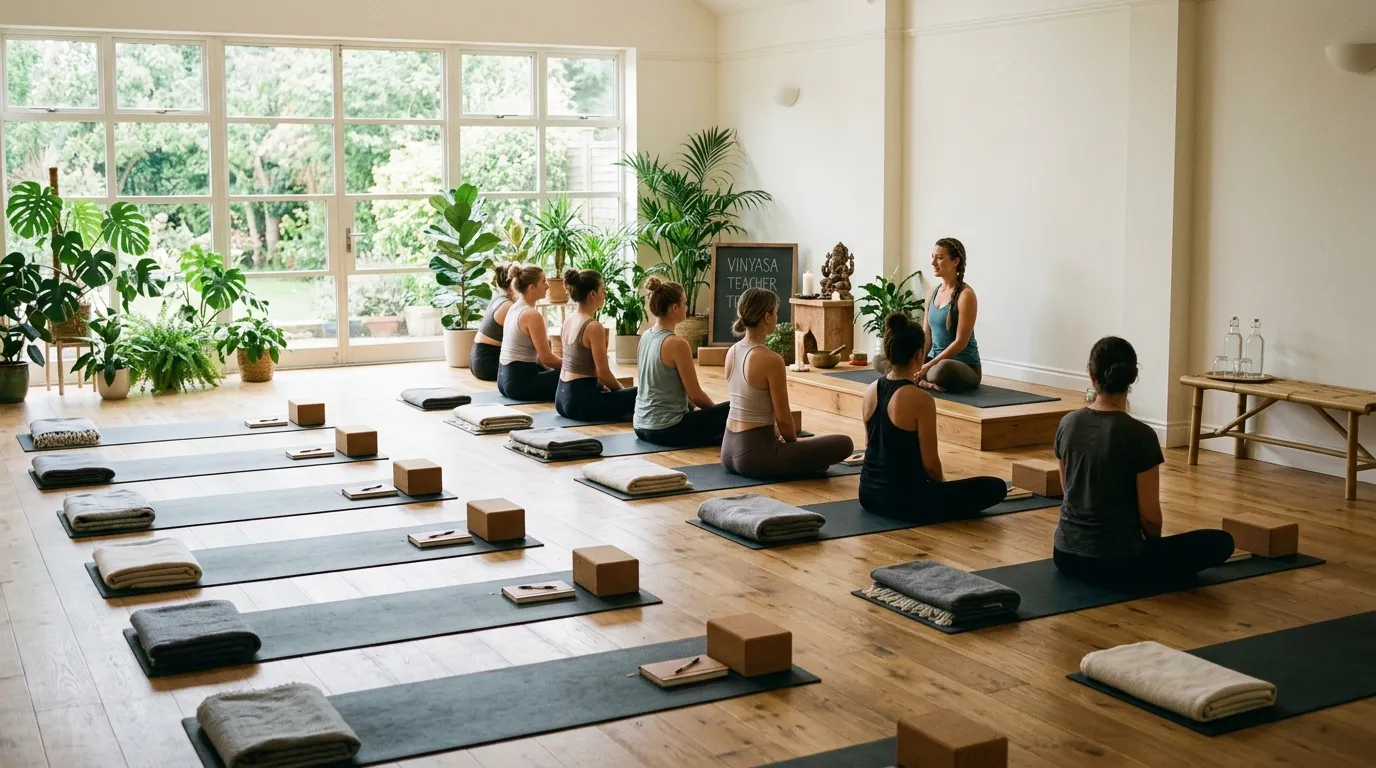
Furthermore, a high-quality yoga vinyasa teacher training requires extensive practice teaching. You will not simply absorb information; you will actively lead your peers through short flows, receiving constructive feedback to refine your voice and presence. This hands-on experience is what transforms a dedicated practitioner into a confident leader. When researching a yoga vinyasa teacher training, ensure the program heavily emphasizes this practical application, as it is the most critical component for your future success in the studio.
Understanding the Core Curriculum and Methodology

The curriculum of a reputable yoga vinyasa teacher training is meticulously designed to build a capable, safe, and inspiring instructor. At the heart of any yoga vinyasa teacher training is the study of Vinyasa sequencing. Vinyasa, meaning “to place in a special way,” requires a deep understanding of how to link postures intelligently so that the body opens safely and effectively. In your yoga vinyasa teacher training, you will learn how to design classes around peak poses, ensuring that the warm-up, standing series, and cool-down all serve a specific physiological purpose.
Additionally, a comprehensive yoga vinyasa teacher training heavily emphasizes the integration of breath and movement. You will dedicate substantial hours to mastering pranayama techniques, such as Ujjayi breath, which serves as the metronome for a Vinyasa class. Your yoga vinyasa teacher training will teach you how to cue the breath alongside the physical movement, creating the meditative, flowing state that students seek. A yoga vinyasa teacher training also covers the subtle body, introducing concepts like chakras, nadis, and bandhas (energetic locks), which are vital for deepening the physical practice and preventing energy depletion.
- Mastering intelligent sequencing to prepare the body for advanced postures
- Developing clear, concise verbal cues for safe student adjustments
- Integrating breathwork to regulate the nervous system during intense flows
Your yoga should also provide a robust framework for modifications and props. Since you will encounter students with varying levels of mobility and strength, your yoga vinyasa teacher training must equip you with the skills to adapt the practice instantly. Understanding how to use blocks, straps, and bolsters effectively is a hallmark of a well-rounded yoga vinyasa teacher training.
The Role of Anatomy and Biomechanics in Your Education
A thorough understanding of the human body is non-negotiable for any aspiring instructor, which is why anatomy and physiology form a massive pillar of any certified yoga vinyasa teacher training. A top-tier yoga vinyasa teacher training goes far beyond memorizing the names of bones and muscles; it dives deep into functional movement and biomechanics. You will explore how joints articulate during specific poses and why certain movements might cause pain or injury for different body types. Your yoga vinyasa teacher training will teach you to view the body as an interconnected system, where a restriction in the ankles might manifest as lower back pain during a downward-facing dog.
During the anatomy modules of your yoga vinyasa teacher training, you will learn about the nervous system and how different styles of movement affect the parasympathetic and sympathetic states. This knowledge is crucial for designing sequences that effectively manage student stress. A rigorous yoga vinyasa teacher training will also cover common injuries, teaching you how to guide students with issues like rotator cuff tears, herniated discs, or hypermobility safely through a flow. Organizations like Yoga Alliance mandate specific hours dedicated strictly to anatomy, ensuring that every graduate of a registered yoga meets a baseline of anatomical competency.
By the end of your yoga , you should feel entirely confident analyzing a student’s posture and making real-time adjustments. Whether you are correcting a misaligned knee in Warrior II or helping a student find stability in a balancing posture, the anatomical insights gained during your yoga vinyasa teacher training are the tools you will rely on every single day to keep your classes safe and accessible.
Comparing Yoga Certification Levels
Understanding the different levels of certification is crucial before enrolling in a yoga vinyasa teacher training. Here is a breakdown of what each standard entails to help you plan your educational journey.
|
Certification Level |
Duration/Hours |
Primary Focus |
Ideal Candidate |
|---|---|---|---|
|
200-Hour Yoga Vinyasa Teacher Training |
3-4 Weeks (Intensive) or 3-6 Months (Part-time) |
Foundational asanas, basic anatomy, intro to philosophy, and teaching methodology. |
Beginners looking to start teaching or deepen personal practice. |
|
300-Hour Yoga Vinyasa Teacher Training |
Variable (Often self-paced or modular) |
Advanced sequencing, therapeutic applications, deeper philosophical study, and subtle body mechanics. |
200-hour graduates seeking advanced skills and specialization. |
|
500-Hour Yoga Vinyasa Teacher Training |
Comprehensive (Combines 200 and 300 hours) |
Complete mastery of curriculum, extensive practicum, and highly specialized anatomical knowledge. |
Dedicated professionals aiming to lead retreats or train other teachers. |
Choosing the right starting point for your yoga vinyasa teacher training depends heavily on your current experience level. Almost all instructors begin with the foundational 200-hour yoga before progressing to advanced modules.
Pro Tips for Thriving During Your Certification

Surviving and thriving in a yoga vinyasa teacher training requires more than just physical endurance; it requires mental resilience and strategic preparation. One of the best pro tips for your yoga vinyasa teacher training is to establish a consistent personal practice before day one. Entering a yoga vinyasa teacher training with a solid foundation of basic poses allows you to focus on the methodology of teaching rather than struggling to learn the physical movements yourself.
Another crucial tip for succeeding in your yoga is to embrace vulnerability. You will be asked to speak in front of others, make mistakes, and receive constructive criticism. The most successful students in a yoga vinyasa teacher training are those who check their egos at the door and treat every critique as an opportunity for growth. Additionally, prioritize your recovery during your yoga . The physical demands can easily lead to burnout if you are not prioritizing sleep, hydration, and proper nutrition. Treat your yoga vinyasa teacher training like an athletic camp—your body needs fuel and rest to process the vast amounts of information you are absorbing daily.
Finally, connect with your cohort. The relationships you build during a yoga vinyasa teacher training often become your strongest professional network. Your peers can serve as practice students, sounding boards for sequence ideas, and eventually, colleagues in the wellness industry. Leaning on your community will make the intensive process of a yoga deeply rewarding.
Common Mistakes to Avoid When Getting Certified
Many enthusiastic practitioners make critical errors when selecting and completing their yoga vinyasa teacher training. The most common mistake is choosing a program based solely on price or location rather than curriculum quality. A deeply discounted yoga vinyasa teacher training might lack experienced lead teachers or skimp on crucial anatomy modules. Always review the syllabus of a prospective yoga vinyasa teacher training to ensure it comprehensively covers all necessary topics and aligns with your learning style.
Another major mistake during a yoga is neglecting your personal practice. It is easy to become so consumed with learning how to teach that you forget to get on your mat for your own well-being. Maintaining your personal practice during a yoga keeps you grounded and reminds you why you fell in love with the discipline in the first place. Furthermore, many students in a yoga vinyasa teacher training try to mimic the style of their lead instructor rather than developing their authentic voice. Your yoga vinyasa teacher training should provide the framework, but your unique personality, experiences, and passions are what will ultimately attract and retain your future students.
- Failing to research the lead instructor’s background and teaching philosophy
- Ignoring physical boundaries and pushing into injuries to keep up with peers
- Memorizing sequences rigidly instead of understanding the underlying methodology
Do not rush the process. A yoga teacher training is a lot of information packed into a short period. Avoid the mistake of thinking you need to know everything the day you graduate. A yoga vinyasa teacher training is simply the beginning of a lifelong educational journey.
Career Opportunities and Post-Graduation Strategy

Completing your yoga vinyasa teacher training opens the door to a diverse array of career paths within the wellness industry. While many graduates immediately pursue roles in traditional studios, a yoga vinyasa teacher training equips you with skills that are highly transferable to gyms, corporate wellness programs, and private client settings. Securing your Yoga Alliance certification immediately after finishing your yoga teacher training is highly recommended, as many premium studios require this credential for liability and quality assurance purposes.
To build a successful career after your yoga vinyasa teacher training, you must approach your teaching as a business. Start by offering community classes to build confidence and gather testimonials. Utilize the sequencing skills learned in your yoga vinyasa teacher training to create specialized workshops, such as “Vinyasa for Runners” or “Arm Balance Foundations,” which can generate higher revenue than standard studio classes. Your yoga vinyasa teacher training gives you the technical skills, but your marketing, networking, and professionalism will dictate your financial success.
Building a digital presence is also vital. In the wake of your yoga vinyasa teacher training, create a professional website and utilize social media to share educational content, demonstrating your expertise. The knowledge you gained during your yoga teacher training—from anatomy to philosophy—provides endless topics for blog posts, short videos, and newsletters that can help you attract private clients and build a loyal community.
Conclusion
Enrolling in a high-quality program is the most important investment you can make in your wellness career. A comprehensive yoga vinyasa teacher training provides the anatomical knowledge, sequencing strategies, and philosophical grounding necessary to lead impactful classes. Use the insights from this guide to confidently choose your path. Ready to transform your practice? Start researching an accredited yoga vinyasa teacher training today and take the first step toward inspiring others on the mat!
FAQs
1. What are the prerequisites for enrolling in a yoga vinyasa teacher training?
Most programs require at least six months to one year of consistent personal practice before enrolling in a yoga vinyasa teacher training. This baseline ensures you have a fundamental understanding of basic postures, allowing you to focus on the methodology and teaching techniques rather than learning the poses from scratch during the intensive course.
2. How much does a standard yoga vinyasa teacher training cost?
The investment for a 200-hour yoga teacher training typically ranges from $1,500 to $3,500. Destination immersions that include room and board will be on the higher end of this spectrum, while local, part-time studio programs tend to be more affordable. Always factor in the cost of required reading materials.
3. Can I teach immediately after finishing my yoga vinyasa teacher training?
Yes, graduating from a 200-hour yoga teacher training legally allows you to teach. However, most new teachers start by leading community or donation-based classes to build their confidence, refine their verbal cues, and practice their sequencing before applying for prime-time slots at competitive studios.
4. Is an online yoga vinyasa teacher training as effective as an in-person program?
Online yoga vinyasa teacher training programs offer incredible flexibility and are often more affordable. However, they require immense self-discipline. While you can learn anatomy and philosophy effectively online, in-person programs offer superior hands-on adjustments and real-time feedback during your practice teaching sessions.
5. What is the difference between a 200-hour and a 300-hour yoga vinyasa teacher training?
A 200-hour yoga vinyasa teacher training provides the foundational knowledge required to teach safely, including basic anatomy and sequencing. A 300-hour program is an advanced module designed for existing teachers to deepen their expertise in therapeutic applications, advanced biomechanics, and complex philosophical concepts.
6. Will a yoga vinyasa teacher training cover other styles like Yin or Restorative?
While the primary focus of a yoga teacher training is dynamic, breath-linked flow, a comprehensive program will often include brief introductions to complementary styles like Yin or Restorative. However, to teach those specific modalities professionally, you will typically need to pursue specialized continuing education courses.
7. How physically demanding is an intensive yoga vinyasa teacher training?
An intensive, one-month yoga vinyasa teacher training is highly demanding, often requiring two to four hours of physical practice daily. It is critical to enter the program in good physical health, prioritize your nutrition, and listen to your body to prevent overuse injuries during the training.
8. Do I need to be able to do advanced poses like handstands to pass a yoga vinyasa teacher training?
Absolutely not. A high-quality yoga teacher training evaluates your ability to teach a pose safely, not your ability to perform it perfectly. Understanding the biomechanics and preparatory steps for an advanced posture is far more critical than demonstrating the full expression yourself.
9. What should I look for when researching the lead instructor of a yoga vinyasa teacher training?
Look for a lead instructor with thousands of hours of teaching experience and an E-RYT 500 credential from Yoga Alliance. A great lead instructor for a yoga vinyasa teacher training should also have a teaching style that resonates with you and a reputation for prioritizing safe, inclusive alignment.
10. How do I maintain my personal practice during a rigorous yoga vinyasa teacher training?
The easiest way to maintain your personal practice during a yoga teacher training is to separate your required study flows from your personal time on the mat. Even dedicating 15 minutes a day to unscripted, intuitive movement can help you stay connected to the joy of your personal practice.
