


In today’s digital landscape, the pace of daily life often leaves us feeling overwhelmed and disconnected from our inner calm. From back-to-back meetings and constant notifications to personal commitments that demand our attention around the clock, modern stressors can easily hijack our mental clarity and physical well-being.
Fortunately, achieving stress-free living through yoga is within reach for everyone, regardless of experience or schedule constraints. This year (2026), more people are recognizing the transformative power of combining mindful movement, breath awareness, and restorative techniques to counteract the effects of chronic tension.Prepare to transform tension into tranquility and discover how stress-free living through yoga can empower you to navigate life’s demands with greater resilience, clarity, and ease.
Understanding Stress and Yoga’s Soothing Science
Stress is a physiological and psychological response triggered when we perceive challenges or threats. In today’s environment, constant alerts, tight deadlines, and personal responsibilities can activate the sympathetic nervous system, increasing heart rate, blood pressure, and the release of cortisol. While short-term stress responses are adaptive, persistent activation may lead to anxiety, insomnia, digestive issues, and weakened immunity. Embracing stress-free living through yoga shifts the body into a state of parasympathetic dominance—the “rest-and-digest” mode—counteracting chronic tension and promoting homeostasis.
Yoga’s multifaceted approach combines three fundamental components: asana (physical postures), pranayama (breath regulation), and dhyana (meditation). Each element plays a crucial role in mitigating the stress response. Controlled breathing techniques stimulate the vagus nerve, signaling the brain to reduce cortisol production. Meanwhile, mindful movement and held stretches release fascia-bound tension, enhancing circulation and muscle flexibility. Finally, meditative focus nurtures mental resilience by training the mind to observe thoughts without judgment.
Recent studies from the National Center for Complementary and Integrative Health indicate that consistent yoga practice can significantly lower perceived stress levels and improve quality of life. By consciously linking movement with breath, practitioners develop a deeper sense of body awareness, learning to intercept stress triggers before they escalate. As you explore the following techniques, remember that patience and self-compassion form the foundation of progress on the path to stress-free living through yoga.
Breathwork: The Foundation for Stress-Free Living Through Yoga
Breathing is an automatic function, yet most of us underestimate its profound impact on physical and emotional well-being. Pranayama, or yogic breathwork, teaches us to harness the breath as a deliberate tool to calm the mind and regulate the nervous system. Incorporating pranayama into your practice is one of the most direct ways to cultivate stress-free living through yoga.
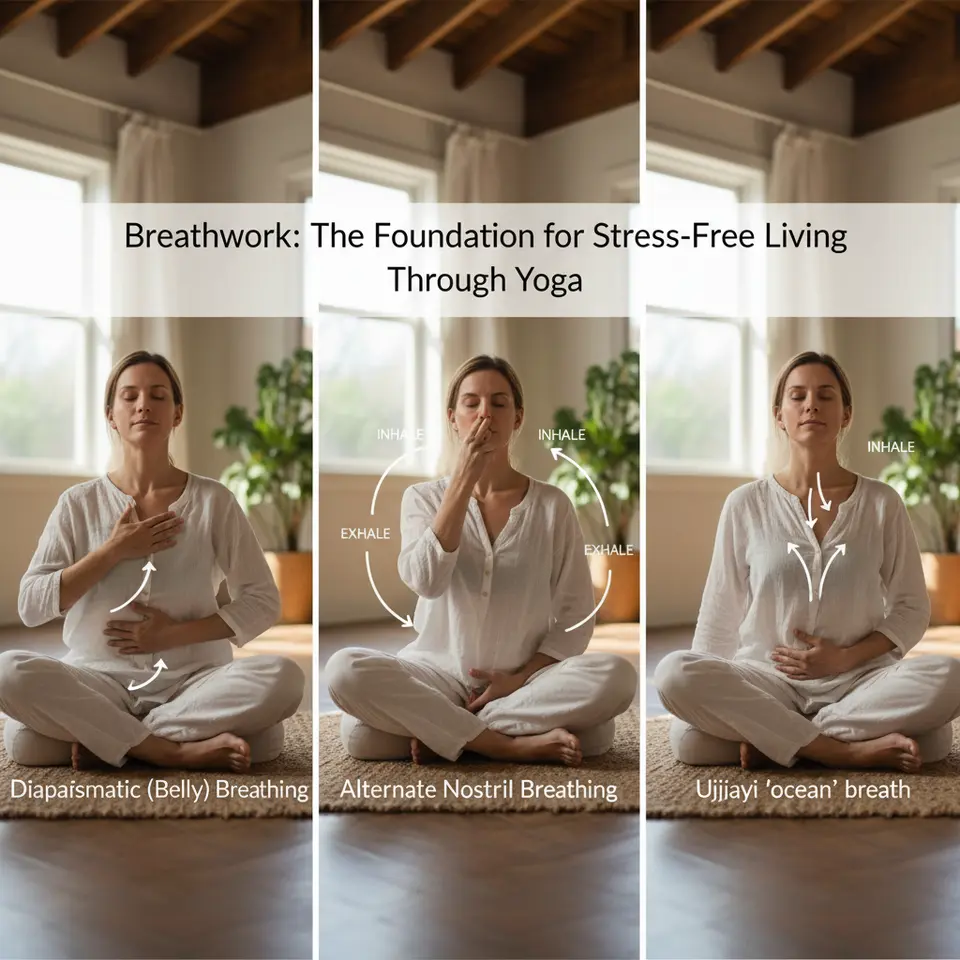
Diaphragmatic breathing, also known as belly breathing, encourages full oxygen exchange and stimulates the vagus nerve. To practice, sit comfortably or recline on your back. Place one hand on your chest and the other on your abdomen. Inhale slowly through your nose, allowing the belly to expand as your diaphragm descends. Exhale gently, drawing the navel toward the spine. Maintain a smooth rhythm for 5–7 minutes, focusing on extending each inhale and exhale equally.
Alternate nostril breathing (Nadi Shodhana) balances the left and right hemispheres of the brain, promoting mental equilibrium. Begin by using your right thumb to close the right nostril, inhaling through the left. Then close the left nostril with your ring finger, release the thumb, and exhale through the right. Continue this pattern for 8–10 cycles, ensuring that inhalations and exhalations are slow and deliberate.
Another effective technique is Ujjayi breath, often referred to as “ocean breath.” Slightly constrict the back of your throat to create a soft hissing sound as you inhale and exhale through the nose. This audible breath anchors your attention, making it ideal during movement sequences. Practicing Ujjayi for 5 minutes at the beginning or end of a session can instantly transition you from a state of agitation to one of focused calm.
Integrating these pranayama techniques into daily life—whether before bed, during work breaks, or at the start of your yoga routine—lays a sturdy foundation for stress-free living through yoga by rewiring your body’s habitual stress responses.
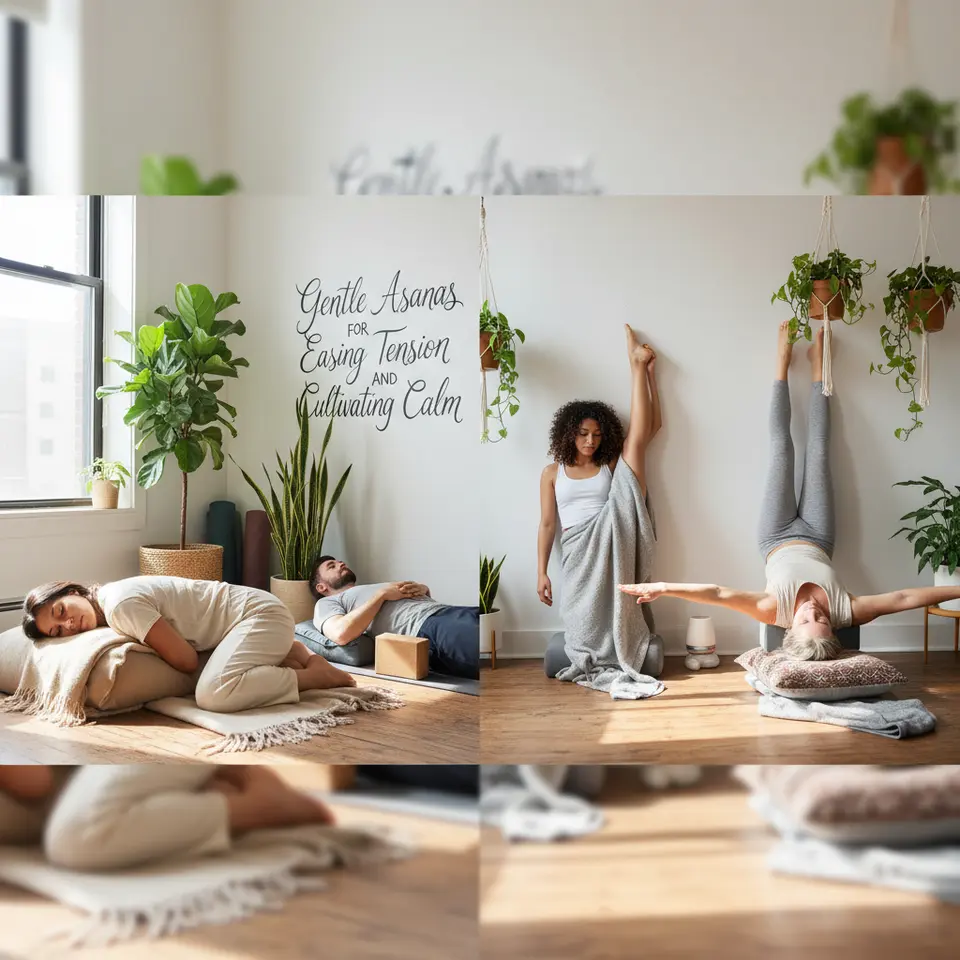
Gentle Asanas for Easing Tension and Cultivating Calm
While dynamic flows can invigorate the body, gentle asanas are the heart of stress relief. These postures prioritize comfort and support, inviting muscles to release stored tension without strain. When practiced regularly, they pave the way for deeper relaxation and a stronger mind–body connection—key ingredients for stress-free living through yoga.
Supported Child’s Pose (Balasana) is a restorative favorite for gently stretching the hips, thighs, and lower back. Begin on all fours, bring your big toes together, and spread your knees wide. Place a bolster, folded blanket, or firm cushion between your thighs. Slowly lower your torso, resting it on the support, and extend your arms alongside your body or overhead. Close your eyes, breathe deeply, and remain for 3–5 minutes, feeling tension melt away.
Reclining Bound Angle Pose (Supta Baddha Konasana) opens the hips and groin while calming the nervous system. Lie on your back and bring the soles of your feet together, allowing the knees to splay open. Position blocks or cushions under each thigh for added support. Rest your arms by your sides, palms facing up, and breathe into any areas of tightness. Stay for 4–6 minutes to deepen the restorative effect.
Legs-Up-the-Wall (Viparita Karani) is another accessible posture that alleviates fatigue and soothes the mind. Scoot close to a wall, then swing your legs up until they rest vertically. Allow your back and shoulders to relax on the mat, and support your hips with a folded blanket if needed. This inversion encourages venous return, reduces swelling, and promotes a sense of weightlessness. Hold for 5–10 minutes, using slow, diaphragmatic breaths to maximize relaxation.
For those experiencing neck or shoulder tension, supported Fish Pose (Matsyasana) can be beneficial. Place a block at shoulder blade height and lie back with the spine aligned along the block. Let your head drop back gently, arms resting by your sides. This gentle heart opener counteracts hunching and invites space in the throat and chest.
Incorporating these gentle asanas into a regular routine nurtures flexibility, eases physical tightness, and lays the groundwork for comprehensive stress-free living through yoga.
Crafting a Balanced Yoga Routine for Stress Management
A well-structured practice weaves together warm-up, core asana work, and restorative phases to guide you from wakefulness to deep relaxation. Aim for 30–60 minutes per session, three to five times per week, tailoring the sequence to your schedule and energy levels.
Warm-Up (5–10 minutes): Start with gentle joint mobilizations—neck rolls, shoulder circles, and seated or standing cat–cow movements to awaken the spine. Incorporate gentle twists and side stretches to prepare the musculature.
Core Asana Practice (15–30 minutes): Blend standing balance poses like Tree Pose (Vrikshasana) and Warrior II (Virabhadrasana II) with seated stretches such as Seated Forward Fold (Paschimottanasana) and Pigeon Pose (Eka Pada Rajakapotasana). Focus on smooth transitions, maintaining Ujjayi breath to synchronize movement and awareness.
Restorative Phase (10–15 minutes): Transition into supported poses outlined above—Supported Child’s Pose, Reclining Bound Angle Pose, and Legs-Up-the-Wall. Use bolsters, blankets, and blocks for comfort and ensure each posture is held long enough to facilitate deep tissue release.
Closing Ritual (5 minutes): Conclude with Savasana (Corpse Pose). Lie flat, arms by your sides with palms facing upward. Optionally, practice a short yoga nidra or guided relaxation through an app like Insight Timer. Finish in a comfortable seated position, practicing five rounds of alternate nostril breathing or gently chanting a mantra that resonates with you.
Maintain a practice journal to track how each session affects your mood, energy, and stress levels. Record which poses brought the greatest ease, any physical or mental shifts, and insights for future adjustments. Customizing your practice in this way deepens self-awareness and fosters a sustainable path toward stress-free living through yoga.
Sustaining Your Practice: Consistency, Adaptation, and Growth
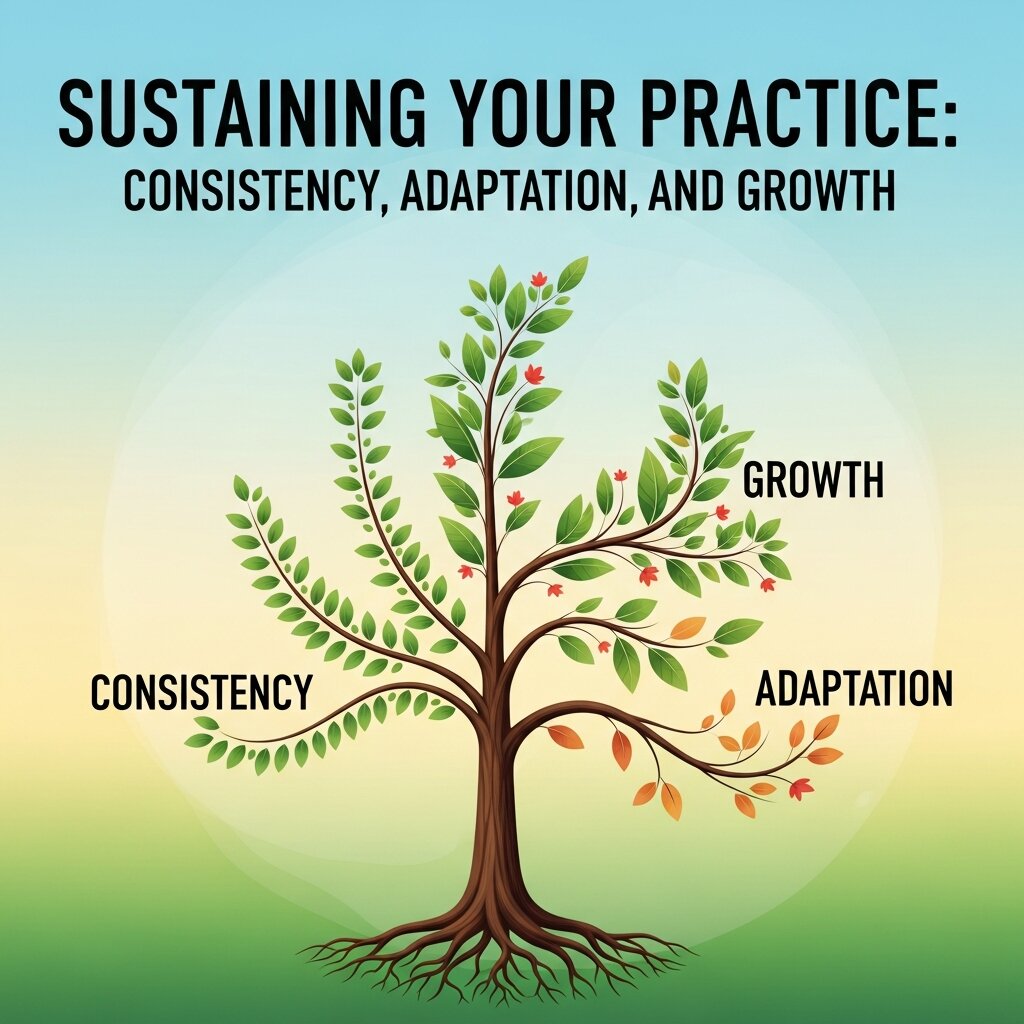
Developing a consistent yoga routine hinges on creating rituals and environments that support your commitment. Begin by scheduling practice sessions as nonnegotiable appointments in your calendar. Treat these slots with the same respect you afford essential meetings, shielding them from interruptions.
Designate a dedicated space for your practice—free from clutter, with a soft mat, a cushion, and perhaps a soothing element such as a candle or indoor plant. This sanctuary cues your mind and body that it’s time to transition from busy life to inward focus.
To weave stress-free living through yoga into daily life, leverage micro-practices. Use mindful breathing before a challenging phone call, perform gentle neck and shoulder rolls between tasks, and engage the core by sitting upright during prolonged periods at a desk. These small moments accumulate, reinforcing neural pathways associated with calm and clarity.
Everyone’s body and stress triggers are unique. If lower-back discomfort arises, incorporate more hip-openers and avoid deep forward folds. High-anxiety individuals may spend extra time on pranayama and meditation before entering physical postures. For pregnant practitioners or those managing injuries, seek guidance from a certified prenatal or therapeutic yoga instructor.
Finally, connect with a community—whether joining an online forum, attending local classes, or enrolling in a workshop. Sharing experiences, learning new variations, and receiving feedback nourishes motivation and continuous growth. By honoring your boundaries, celebrating small victories, and adapting as needed, you can transform yoga from a sporadic activity into a lifelong companion in your pursuit of stress-free living through yoga.
Conclusion
Stress-free living through yoga is a dynamic journey that combines mindful breathing, gentle movement, and restorative practices to nurture your body and mind. In today’s hectic environment, setting aside time for diaphragmatic breathwork, supported asanas, and focused meditation can dramatically reduce chronic tension, enhance emotional resilience, and foster deeper self-awareness. By designing a balanced routine—complete with warm-up, core sequences, restorative phases, and closing rituals—you create a reliable framework for lasting well-being. Remember that consistency, adaptability, and community support are the keys to sustaining your practice. Embrace each session as an opportunity to reconnect with your inner calm, honoring how yoga reshapes your response to life’s challenges. Roll out your mat, breathe deeply, and take the first step toward stress-free living through yoga today.
FAQ
1. What is stress-free living through yoga?
Stress-free living through yoga involves using mindful breathing, gentle movements, and meditation to reduce physical tension and calm the mind. It helps regulate the nervous system, lower cortisol levels, and improve emotional balance, making it easier to handle daily stress and maintain overall well-being.
2. How does yoga reduce stress scientifically?
Yoga activates the parasympathetic nervous system, often called the “rest-and-digest” mode. Through breath control and slow movements, it reduces heart rate, lowers blood pressure, and decreases cortisol production. This physiological shift helps counter chronic stress and promotes relaxation, clarity, and mental stability.
3. Which breathing technique is best for beginners?
Diaphragmatic breathing is ideal for beginners. It focuses on slow, deep breaths using the diaphragm rather than shallow chest breathing. This technique improves oxygen flow, relaxes the body, and calms the mind, making it a simple yet powerful starting point for stress relief.
4. How long should I practice yoga to see stress relief?
You can feel immediate relaxation after a single session, but consistent practice yields long-term benefits. Aim for 30–60 minutes, three to five times per week. Even short daily sessions of 10–15 minutes can significantly reduce stress and improve overall mental clarity over time.
5. Are gentle yoga poses effective for stress relief?
Yes, gentle and restorative poses are highly effective. They relax muscles, release stored tension, and calm the nervous system. Poses like Child’s Pose or Legs-Up-the-Wall encourage deep breathing and mental stillness, making them ideal for reducing anxiety and promoting relaxation.
6. Can yoga help with anxiety and insomnia?
Yoga can significantly improve anxiety and sleep quality. Breathing exercises and meditation calm the mind, while physical postures release tension. Regular practice helps regulate sleep patterns, reduce racing thoughts, and create a sense of calm that supports deeper, more restful sleep.
7. What is the best time of day to practice yoga for stress?
The best time depends on your routine. Morning yoga energizes and sets a calm tone for the day, while evening sessions help release accumulated stress and prepare the body for restful sleep. Choose a time that fits your schedule to maintain consistency.
8. Do I need equipment to start yoga at home?
No, you can begin with minimal equipment. A comfortable mat and supportive cushions or blankets are enough for most practices. Props enhance comfort in restorative poses, but they are optional. The focus should be on breath, movement, and mindfulness rather than gear.
9. Can busy people still benefit from yoga?
Absolutely. Even short sessions or micro-practices like mindful breathing or simple stretches during breaks can reduce stress. Consistency matters more than duration, so integrating small moments of yoga into your daily routine can still deliver meaningful benefits.
10. Is yoga safe for everyone?
Yoga is generally safe and adaptable for most people. However, individuals with injuries, chronic conditions, or special circumstances should consult a healthcare provider or certified instructor. Modifying poses and listening to your body ensures a safe and effective practice for stress relief.
